Where and Under What Conditions Can You See Diamond Dust in Hokkaido? How Cold a Morning It Takes, and Where It Appears [2026-27]
Diamond dust in Hokkaido: Nayoro guide says Jan–Feb, morning or evening, −10°C or below, no wind, clear sky. Cold spots and where to stay (verified 2026-10-14).
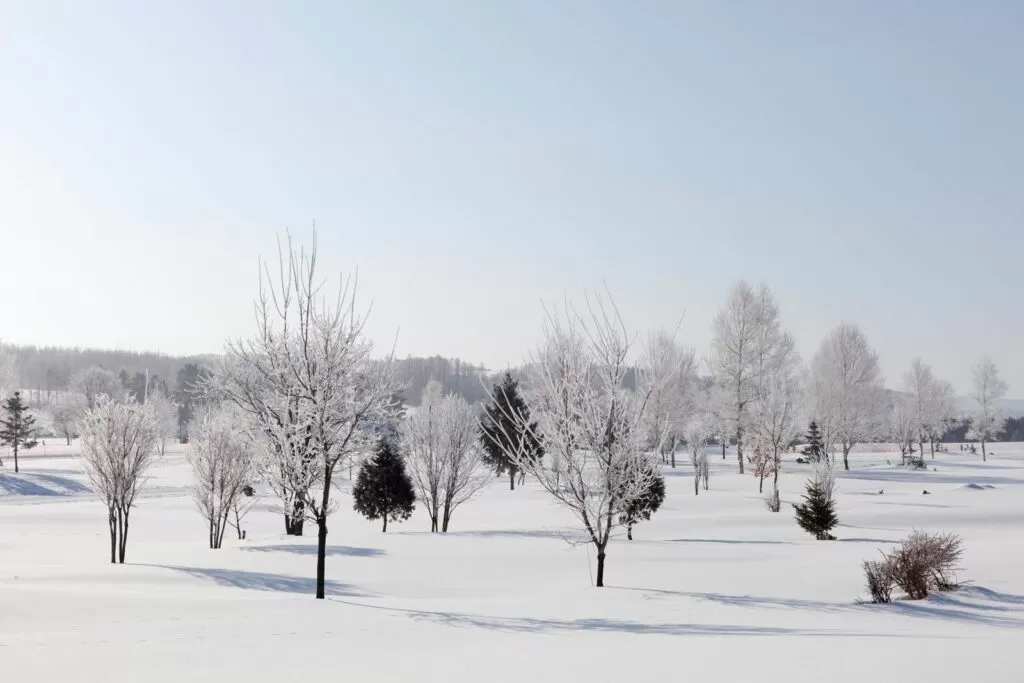
Diamond dust is defined in the Japan Meteorological Agency (JMA) glossary as “minute ice crystals formed by sublimation of water vapor in the atmosphere that slowly descend.” According to the Nayoro City Migration Promotion Council, you can see it “in the morning or evening in January–February, when the temperature is 10 degrees below zero or colder, there is no wind, and the sky is clear” (Nayoro City Migration Promotion Council, verified 2026-10-14). In short, what matters is being in a place with no wind and clear skies on a cold winter morning.
The place an official source names as “you can see it here” is Nayoro Piyashiri Ski Area. Instead of listing places, this article compares “how cold the mornings get” using JMA normals and sets out where to spend the night before and wake up for the morning.
Compare Hokkaido campervan rentals
Base yourself at New Chitose Airport and compare rates, vehicle types, and pickup locations all in one place.
Compare rental companies and vehicles →What Is Diamond Dust? What Does the JMA Glossary Say?
In the JMA’s “Terms Used in Weather Forecasts,” “saihyō (diamond dust)” is listed as a precipitation term. The explanation is “minute ice crystals formed by sublimation of water vapor in the atmosphere that slowly descend.” Next to it is “ice fog,” described as “a state in which minute ice crystals float in the atmosphere and visibility is less than 1 km. In forecasts it is called ‘fog.’” (JMA: Terms Used in Weather Forecasts, Precipitation, verified 2026-10-14).
For conditions, this article uses the Nayoro City guide quoted in the next section. The entry in the JMA glossary is an organization of the terms used in weather forecasts. It is not a source that guarantees at what temperature diamond dust appears.
How Cold Does It Have to Be? The Conditions in Nayoro City’s Guide
The Nayoro City Migration Promotion Council’s article lists these conditions: “morning or evening in January–February,” “temperature 10 degrees below zero or colder,” “no wind,” and “clear sky” (Nayoro City Migration Promotion Council, verified 2026-10-14). The same article says that February mornings can reach around 15 to 20 degrees below zero.
| Condition | Nayoro City Migration Promotion Council |
|---|---|
| Season | January–February |
| Time of day | Morning or evening |
| Temperature | 10 degrees below zero or colder |
| Wind | No wind |
| Sky | Clear |
These conditions are written as a guide for a specific area. Even if the temperature is 10 degrees below zero or colder, the conditions are not met if it is windy or cloudy.
When and What Time Should You Go? Morning and Evening Hours in January–February
The time of day is also given specifically in Nayoro City’s guide: 7:00–9:00 after sunrise, or 16:00–17:00 just after sunset. For the morning, because the ski area opens at 9:00, the guide recommends a tour with a local guide. The “Observation Advice” in the same article says that right after opening, light comes in from the east and it is easier to see, so around 9:00 is recommended (Nayoro City Migration Promotion Council, verified 2026-10-14).
Before you leave, check the latest information from Nayoro Piyashiri Ski Area and Nayoro City.
Where in Hokkaido Can You See It? The Only Place Officially Named Is Nayoro Piyashiri Ski Area
The Nayoro City Migration Promotion Council names Nayoro Piyashiri Ski Area as an observation spot. The reason given is “because the large Teshio River flows nearby, there is a lot of moisture in the air.” The locations are around the unloading areas of Lift 1 and Lift 2, and the Giant Course (Nayoro City Migration Promotion Council, verified 2026-10-14).
Among municipal and facility guides, Nayoro is the place presented as somewhere you can see diamond dust.
For winter things to do in Nayoro, including hot springs and drives, see Winter Campervan Trip to Shibetsu and Nayoro.
Where Does It Get Coldest? Comparing Normal Daily Minimum Temperatures
For readers who want to know which places have the lowest minimum temperatures, here are the average daily minimum temperatures from the JMA AMeDAS monthly normals (1991–2020). The figures are typical values, not a forecast for the day. They are sorted by January, lowest first (JMA AMeDAS monthly normals, verified 2026-10-14).
| Station (AMeDAS) | January | February | December |
|---|---|---|---|
| Rikubetsu | -19.6℃ | -18.8℃ | -14.9℃ |
| Shimukappu | -18.0℃ | -17.7℃ | -12.4℃ |
| Etanbetsu | -16.3℃ | -16.3℃ | -11.0℃ |
| Shumarinai | -15.4℃ | -15.8℃ | -10.6℃ |
| Biei | -14.8℃ | -14.7℃ | -10.8℃ |
| Nayoro | -14.7℃ | -14.9℃ | -10.1℃ |
| Horokanai | -14.5℃ | -14.5℃ | -9.8℃ |
Rikubetsu is the lowest, at −19.6°C in January. Rikubetsu Town calls itself “the coldest town in Japan” on its official website (Rikubetsu Town, verified 2026-10-14). Nayoro, on the other hand, which is presented as an observation site for diamond dust, is in the middle of this table. One thing to note is that the AMeDAS Nayoro station and Nayoro Piyashiri Ski Area are not in the same place. The temperature at the ski area has to be considered separately from the values in this table.
Here are also the January normals of daily minimum temperature for staffed weather stations (such as local meteorological observatories). Asahikawa is −11.7°C, Obihiro is −13.0°C, Kushiro is −9.8°C, Abashiri is −8.9°C, and Sapporo and Wakkanai are both −6.4°C (JMA monthly normals, verified 2026-10-14).
| Station (staffed) | January daily minimum (normal) |
|---|---|
| Obihiro | -13.0℃ |
| Asahikawa | -11.7℃ |
| Kushiro | -9.8℃ |
| Abashiri | -8.9℃ |
| Sapporo | -6.4℃ |
| Wakkanai | -6.4℃ |
Places with low minimum temperatures are not necessarily places where you can see diamond dust. This table only shows “how cold it gets.” The January normal of daily minimum temperature falls below −10°C at all 7 AMeDAS stations, and, among the staffed stations, at Obihiro and Asahikawa. A normal is the average of the daily minimum temperature over one month.
Is It Different From a Sun Pillar? The Difference From a Pillar of Light
The Nayoro City Migration Promotion Council’s article explains the phenomenon in which sunlight hits diamond dust and the light, lined up in a regular pattern, looks like a pillar as a “sun pillar phenomenon (taiyō-chū).” It also says that at night, when lighting or city lights hit it, the same mechanism produces a “light pillar phenomenon” (Nayoro City Migration Promotion Council, verified 2026-10-14). The distinction is that diamond dust itself is glittering ice particles, and a sun pillar is the pillar formed when light hits them.
The article also says a sun pillar is a phenomenon that “is not easy to come across.” Not seeing one is nothing unusual.
What About Other Winter Morning Phenomena? The Difference From Jewelry Ice
Another phenomenon to aim for on winter mornings is the Jewelry Ice at Otsu Coast in Tokachi. The timing, the location, and how parking is handled are covered in the Jewelry Ice article. For other winter highlights, look through 43 Things Only Hokkaido Has in Winter.
New Chitose Airport · Tokachi-Obihiro Airport
See Moving Inn campervans
Check vehicle types, rates, and availability on the official site.
See details at Moving Inn →If You Set Out Around Sunrise, Where Should You Stay the Night Before? How Do You Stay Warm?
Because the observation times are after sunrise or just after sunset, you will start moving while it is still dark in the morning. Staying near your destination the night before reduces the driving burden. Places where a campervan can stay in northern Hokkaido are covered in the article on RV parks in northern Hokkaido, and what to check for sleeping in the vehicle in winter is covered in Winter Campervan Sleeping in Hokkaido.
Ask the rental company whether the vehicle has heating equipment. Avoid keeping the engine running while parked to stay warm. For a guide to winter temperatures, see Hokkaido Winter Temperatures, and for roads that close, see Hokkaido Roads That Close in Winter.
Nayoro City’s guide says to take thorough cold-weather measures with ski wear, a hat, gloves, disposable heat packs, and thick socks (Nayoro City Migration Promotion Council, verified 2026-10-14).
Checklist for Before the Day
- Whether the forecast minimum temperature for the day reaches 10 degrees below zero or colder (JMA forecast)
- Whether the wind forecast and the clear-sky forecast are in place
- The latest operating and access information for the site (such as Nayoro Piyashiri Ski Area)
- Where you will stay the night before, and your departure time in the morning (check sunrise times with the JMA or the National Astronomical Observatory of Japan)
- Whether the vehicle has heating, and how to use it (ask the rental company)
- Winter road closure information
Frequently Asked Questions (FAQ)
Q. What is diamond dust?
The JMA glossary describes it as “minute ice crystals formed by sublimation of water vapor in the atmosphere that slowly descend.”
Q. At what temperature can you see it?
According to the Nayoro City Migration Promotion Council, it is in the morning or evening in January–February, at 10 degrees below zero or colder, with no wind and a clear sky.
Q. Where in Hokkaido can you see it?
The place with official guidance is Nayoro Piyashiri Ski Area (around the unloading areas of Lift 1 and Lift 2, and the Giant Course).
Q. Rikubetsu is the coldest place in Japan, so can you see it there?
Rikubetsu Town calls itself “the coldest town in Japan,” and its January normal of daily minimum temperature is −19.6°C. If it is windy or cloudy, the conditions in the Nayoro guide are not met.
Q. Is it different from a sun pillar?
A sun pillar is described as the phenomenon in which sunlight hits diamond dust and it looks like a pillar of light. For details, see the article on winter in Nayoro.
Pages to Read Next
- Winter Campervan Trip to Shibetsu and Nayoro: Snowy Scenery and a Hot Spring Drive in Northern Hokkaido
- When and Where Can You See Jewelry Ice? Parking and Sleeping in the Vehicle at Otsu Coast
- Northern Hokkaido Has Only Two RV Parks: Nayoro and Wassamu
- Winter Campervan Sleeping in Hokkaido: How to Sleep Warm
- Hokkaido Roads That Close in Winter
Book a Campervan in Hokkaido
Moving Inn New Chitose Airport supports English booking and offers airport transfers.