Traveling Hokkaido with Pets: No Need to Search for Hotels with a Campervan | Comparing 10 Locations for Dogs & Cats [2026 Edition]
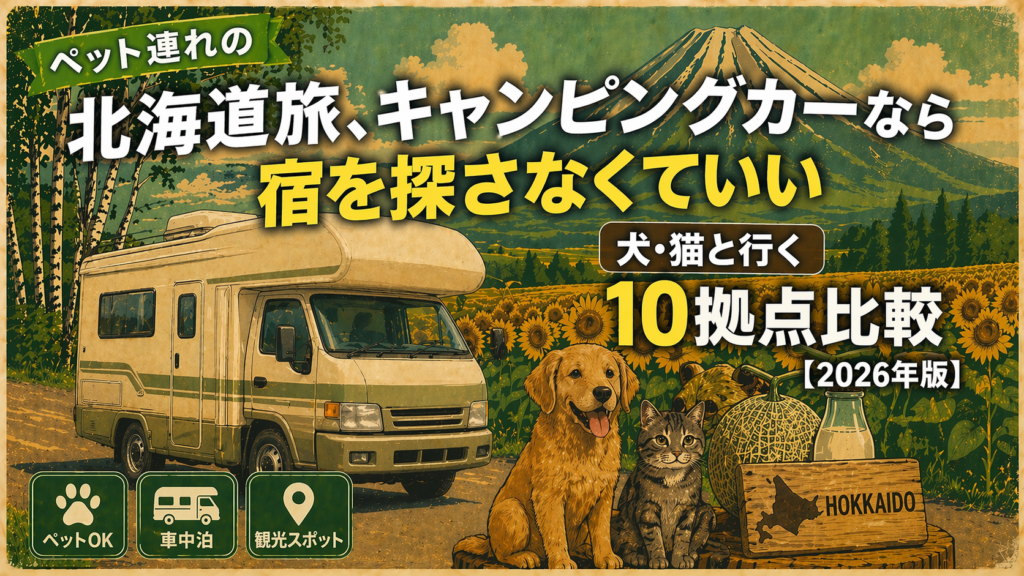
Traveling Hokkaido with Pets: No Need to Search for Hotels with a Campervan
You want to take your pet to Hokkaido. But when you start searching for accommodations, most pet owners hit the same wall. Pet-friendly hotels are scarce, and even when available, they often require extra fees and cage check-in, meaning you usually can’t sleep together in the room. “We’re family, but separated at night” — that’s the hardest part of traveling with a pet.
With a campervan, you don’t need to search for accommodations at all. You can sleep together inside the vehicle, and you don’t have to keep your pet cooped up in a cage during transit. If they get tired, just stop and take a walk. You don’t need to rush to make check-in time, so you can adjust the itinerary to your pet’s pace. The sleeping space is wider than a regular car’s back seat, so even large dogs won’t feel cramped.
However, pet acceptance conditions vary by location. Cleaning fees, breed restrictions, and cage requirements differ, so it’s not uncommon to find out after booking that “the compatible vehicle was already taken” or “pets are only allowed in certain vehicle grades.” This article compares 10 Hokkaido locations that rent pet-friendly campervans, with actual cleaning fees and rules side by side.
What “Pet-Friendly” Means and How It Differs by Location
Compare Hokkaido Campervan Rentals
Compare rates, vehicle types, and locations based out of New Chitose Airport.
Compare rental companies & rates →Even when a place says “pets welcome,” the details vary significantly by location. To avoid the frustration of discovering after booking that “only one compatible vehicle exists” or “dogs only, no cats,” here are 4 key points to understand first.
Types of Animals Accepted | Most Locations Dogs Only
Among pet-friendly rentals in Hokkaido, the most common pattern is “dogs only.” Locations that also accept cats are very few, and others (rabbits, birds, ferrets, etc.) are even more limited. If you want to bring a cat, always confirm with the location before booking.
Cleaning Fee Average: ¥2,200–¥11,000 per rental
Most locations charge a “cleaning fee” for pet passengers. Researching 10 Hokkaido locations, the price range looked like this:
- Fixed rate type: ¥4,400 / ¥11,000 per pet per rental, etc.
- Percentage type: 15–20% added to the basic rental fee
- Some locations charge extra for 2 or more pets
For a 3-night, 4-day rental, expect the cleaning fee alone to add ¥5,000–¥15,000, which helps reduce budget surprises.
Cage (Crate) Required vs. Optional
Some locations require cage use during travel; others allow free roaming inside the vehicle. While there is no law against having dogs or cats roam freely in a vehicle, for accident safety during sudden braking, securing pets in a cage is advisable even in campervans. Cages are generally customer-provided; rentals are rare.
Breed, Weight, and Number Restrictions
Some locations accept medium and large dogs; others accept small dogs only. Chihuahuas and toy poodles are fine almost everywhere, but breeds over 10kg like golden retrievers and labradors reduce the available locations by more than half. Many locations limit to “2 pets maximum,” so multi-pet households must confirm in advance.
Top 10 Pet-Friendly Campervan Rentals in Hokkaido [Comparison Table]
Here are 10 Hokkaido locations that rent pet-friendly vehicles, compared by area, cleaning fee, cage requirement, and breed restrictions.
| Location | Area | Cleaning Fee (approx.) | Cage | Breed/Restrictions |
|---|---|---|---|---|
| Moving Inn Tokachi Obihiro Airport | Obihiro Airport / Tokachi | Inquire | Required | HIACE LEAD vehicles only |
| Vantrip Tokachi Branch | Tokachi / Obihiro | Inquire | Required | Regard/Serengethi models only |
| Japan Road Trip New Chitose Airport | New Chitose / Tomakomai | ¥5,500/pet/rental | Required | Small to medium dogs |
| Tabi Suru Kuruma New Chitose BASE | Near New Chitose | Inquire | Required | Dog park on-site, breeds negotiable |
| New Chitose Campervan Rental Center | New Chitose / In-airport | +20% of base rate | Required | Dogs only, small to medium |
| Ohana Hokkaido Rental Camping Car | Sapporo | +15% of vehicle rate | Required | ALEN-compatible vehicles only |
| Ureska Sapporo BASE | Ebetsu | 1 pet ¥4,400 / 2+ pets ¥8,800 | Required | Dogs only |
| Sapporo Campervan Rental Center | Sapporo | +20% of base rate | Required | Dogs only |
| KEGANI CAMP | Sapporo | ¥5,500/pet | Required | Small dogs only |
| Hakodate Campervan Rental Nomadoya | Hakodate | ¥11,000/rental | Required | Dogs only |
Moving Inn Tokachi Obihiro Airport (Obihiro Area)
About 5 minutes by car from Obihiro Airport. Pets are accepted only in the HIACE LEAD vehicle. Easy airport access, ideal for those wanting to explore eastern Hokkaido’s nature with their dog. The appeal is being able to head straight to the Tokachi Plains right from arrival. Check the Obihiro/Tokachi campervan rental comparison too.
Choosing in the New Chitose / Sapporo Area
In the New Chitose Airport area with pets, “Japan Road Trip New Chitose Airport” or “Tabi Suru Kuruma New Chitose BASE” are strong candidates. The latter has a dog park on-site, letting your dog run before departure — a unique advantage. From Sapporo, Ureska Sapporo BASE (Ebetsu) and KEGANI CAMP have transparent cleaning fees that make budgeting easy, and they’re popular with repeat customers.
Choosing in the Hakodate / Southern Hokkaido Area
For travel centered on southern Hokkaido, Nomadoya is the only pet-friendly location. You can pick up near Hakodate Station, which also works for those arriving by ferry from Honshu. For details on pet-friendly options in the Hakodate area, see our Hakodate campervan rental guide.
Vehicle Selection for Pet Travel | Van Conversion vs. Cab-over: Which Is Better?
For campervan travel with pets, vehicle choice greatly affects comfort. Here’s a comparison of van conversions (HiAce-based) and cab-overs (truck-based) from a pet’s perspective.
Why Van Conversions Suit Pet Travel
HiAce-based van conversions have a lower floor height, making boarding easier for elderly or small dogs. The driving feel is closer to a regular car, with less swaying that can cause motion sickness. Fuel efficiency is around 10km/L on diesel, so even long-drive enthusiasts won’t feel the burden.
Cab-overs: Spacious but Bumpier
Cab-overs have wide interiors, so even large dogs can use the bed, sofa, and aisle separately. However, with a vehicle height near 3m, they sway more in crosswinds and on rough roads, making some pets more prone to motion sickness. The boarding step is also higher, so elderly dogs will need a ramp or step stool.
Kei Campervans: Best for Short Trips, 1–2 Nights
Top fuel efficiency and maneuverability, but interior space is quite limited — realistically one small dog at most. Fine for a 1–2 night local trip, but for longer touring, a van conversion or larger is advisable.
Pet Travel Etiquette and Precautions
Just because the vehicle is pet-friendly doesn’t mean pets can roam freely. Here are the basic rules to avoid trouble and ensure the next guest has a pleasant experience.
Secure in Cage While Driving
During sudden braking, a free-roaming pet can injure a person by colliding with them. For the pet’s own safety, flying into the dashboard can be life-threatening. Secure the cage with seat belts or lashing straps so it can’t move. Campervan bed spaces are wide, so even large cages fit comfortably.
Protect Seats and Beds
Fur and dirt can lead to additional cleaning charges. Prepare the following before departure:
- Waterproof seat covers (for passenger seat and bed)
- Pet blankets / 2–3 towels
- Odor neutralizer spray (pet-safe mildly acidic type)
Feeding and Water Inside the Vehicle
Use spill-resistant dishes and suction-cup water bottles to prevent spills while driving. Feed during stops as a rule. Food smell lingers in the vehicle, so clean up dishes and deodorize immediately after eating.
Cleaning Before Return
Vacuuming and removing pet fur before return makes a big difference. It doesn’t have to be perfect, but returning it in a state that shows you made an effort means you’ll be welcomed warmly on repeat visits. Some locations charge additional cleaning for excessive fur, especially during shedding season.
Pet-Friendly Spots in Hokkaido
Since you’re traveling with a pet-friendly campervan, you’ll want to fill your itinerary with pet-friendly stops too. Here are 3 types of destinations.
Dog Run RV Parks
Hokkaido has several RV parks with dog runs. Expect ¥3,000–5,000/night with power, water, and waste disposal. A perfect environment to let your dog run in the evening after a long day of driving.
Pet-Friendly Michi-no-Eki and Parks
Many Hokkaido Michi-no-Eki have large parking lots with lawn areas where pets can take a walk. However, overnight stays are not formally permitted, so moving to a nearby RV park or paid overnight site for the night is advisable.
Pet-Friendly Tourist Facilities and Restaurants
Areas around Niseko, Furano, and Biei have relatively many pet-friendly cafes, flower fields, and experience facilities. Conversely, the Otaru Canal area and central Sapporo still have fewer pet-friendly restaurants. When planning your route, decide on pet-friendly lunch and rest stops first, then calculate travel times backward.
Recommended 3-Day Model Course
Starting from New Chitose Airport, here’s a pet-friendly model course centered on dog runs and pet-friendly facilities:
- Day 1: Arrive at New Chitose → Pick up at Tabi Suru Kuruma New Chitose BASE → Dog run at Lake Shikotsu → RV park near Tomakomai
- Day 2: Tomakomai → Noboribetsu Hell Valley (dog-friendly walking) → Lunch by Lake Toya → RV park near Lake Toya
- Day 3: Lake Toya → Lunch at a dog cafe in Niseko → Sapporo or Otaru → Return
Keep daily driving to 200–250km and secure morning and evening walking time for your pet.
Seasonal Precautions | Heatstroke in Summer, Cold in Winter
Unlike Honshu, Hokkaido summers are cool in the morning and evening, but daytime temperatures inside a parked vehicle can reach nearly 50°C. The most dangerous situation is leaving a pet in the vehicle for a quick shopping trip. Some campervans have sub-battery-powered ventilation fans, but running AC for extended periods without the engine is not possible.
Summer (June–August) Precautions
- Do not leave pets in the vehicle during daytime stops (even brief shopping)
- Drive with roof vents open (prioritize ventilation)
- Bring cooling bandanas with ice packs and cool mats
- Watch for hot asphalt surface temperatures. Morning and evening walks are the rule
Winter (December–March) Precautions
- Choose a vehicle with an FF heater (for heating while sleeping)
- Bring blankets and carpets to prevent cold feet
- Be careful of paw frostbite and road salt on snowy walks
- Store vaccine certificates in a ziplock bag to protect from snow and moisture
Cost Simulation | 3-Night, 4-Day Trip Total with Pets
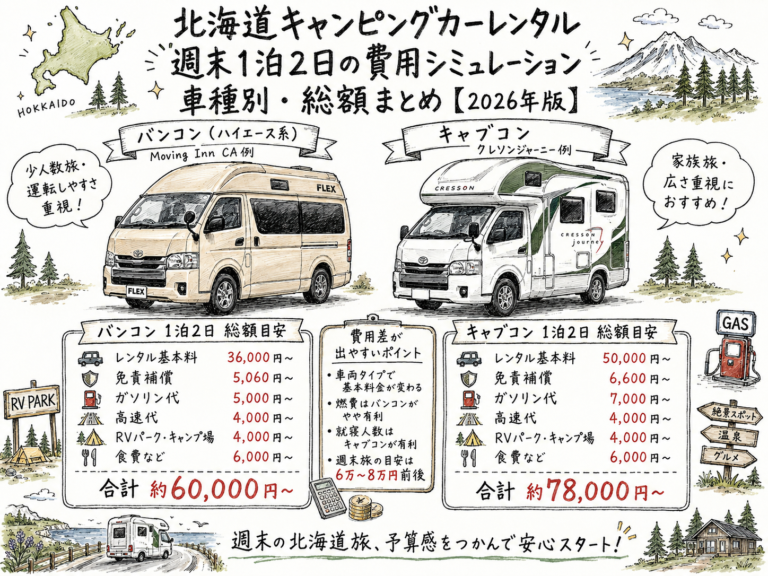
Here’s a rough total for renting a Moving Inn vehicle with a pet for 3 nights, 4 days. Costs vary by vehicle type and season — confirm with each location’s estimate before booking.
| Item | Amount (approx.) | Notes |
|---|---|---|
| Rental fee (3 nights, 4 days) | ¥80,000–120,000 | 5-seater van conversion class |
| Pet cleaning fee | ¥5,500–11,000 | Fixed or 15–20% of base rate |
| Fuel (assuming 1,000km) | ¥16,000–20,000 | Diesel 10km/L at ¥160/L |
| RV park / parking | ¥6,000–12,000 | 3 nights, powered sites |
| Insurance / compensation (optional) | ¥3,000–6,000 | Depends on location plan |
| Total | ¥110,500–169,000 | — |
Packing List for Pet Travel
Essential Items
- Cage (for securing during travel)
- Leash, collar, harness (bring a spare)
- Regular food and treats (for 4 nights if staying 3)
- Water and drinking bottle (suction cup type)
- Vaccine certificate and rabies vaccination tag copies
- Waste bags and pet pee pads
Useful Items
- Waterproof seat covers (for bed and passenger seat)
- Blanket and familiar towels
- Odor spray and lint roller
- Waterproof mat (for outdoor feeding and water)
- Pet first aid kit
FAQ
Q1: Can I bring a cat?
Very few Hokkaido pet-friendly campervan rentals accept cats. Most locations specify “dogs only” in their booking forms, so if you have a cat, call ahead to confirm individually.
Q2: When is the cleaning fee paid?
Most locations settle at return, either cash or combined with the vehicle fee. Some require prepayment at booking. If fur or odor exceeds the standard, additional charges may apply — vacuuming before return helps avoid extra costs.
Q3: Are there additional charges if there’s a lot of fur?
If deemed to exceed normal cleaning scope, an additional cleaning fee (¥5,000–10,000) may be charged. Large dogs during shedding season are especially prone to this, so daily brushing and frequent vacuuming to reduce fur is the smart approach.
Q4: Are there vehicles available for large dogs?
Locations that can accommodate medium to large dogs over 10kg are limited. Moving Inn Tokachi Obihiro Airport and Ureska Sapporo BASE have larger vehicles that are more suitable for large dogs. However, pre-declaration is required — provide the breed, weight, and number of pets at booking.
Q5: Are pet seat covers available for rent?
Only a few locations offer them. Plan to bring your own — even 100-yen store waterproof mats work well. Camping blankets also work perfectly.
Q6: What if my pet has an accident inside the vehicle?
First absorb with a pee pad, then treat with a pet-safe odor neutralizer spray. Don’t leave it — the seat core will absorb the odor. Remove the bed or seat to air it out immediately. Reporting honestly at return usually keeps it within the cleaning fee range.
Q7: Should I get pet insurance?
Sudden illness during travel may require a vet visit. If you already have pet insurance, confirm in advance whether the clinic in the area is covered. If uninsured, simply looking up 1–2 24-hour animal hospitals in Hokkaido for your itinerary will make things much smoother if something happens.
Q8: Things to note when bringing pets by ferry in summer?
From Honshu by ferry, routes arriving at Tomakomai or Otaru port are common. Some ferries have pet-dedicated rooms; others only allow cage storage in the vehicle deck. Summer vehicle decks can get very hot, so prioritize ferries with pet-in-cabin options, and allow time for water and walks immediately upon arrival.
Summary | Tips for Enjoying Hokkaido Campervan Travel with Pets
When choosing a pet-friendly campervan in Hokkaido, there are only 3 key points:
- Confirm cleaning fees, breed restrictions, and cage requirements first to prevent budget surprises
- In the New Chitose area, avoid Moving Inn New Chitose Airport (no pets) and consider Japan Road Trip or Tabi Suru Kuruma New Chitose BASE
- In the Obihiro/Tokachi area, Moving Inn Tokachi Obihiro Airport is the top choice for enjoying eastern Hokkaido’s nature with your dog
The biggest appeal of traveling with a pet in a campervan is freedom from the stress of finding accommodations. By combining Michi-no-Eki and RV parks, you can create a 3–7 day trip experiencing the vastness of Hokkaido alongside your beloved dog or cat.