Shiretoko & Utoro Campervan Drive Guide | World Heritage, Cruise & Shiretoko Pass [2026]
A guide to exploring the Shiretoko and Utoro area by campervan. Covers Shiretoko Five Lakes, Shiretoko Pass, the Utoro cruise, Rausu fishing port, campsites, and a Hokkaido eastern circuit itinerary.
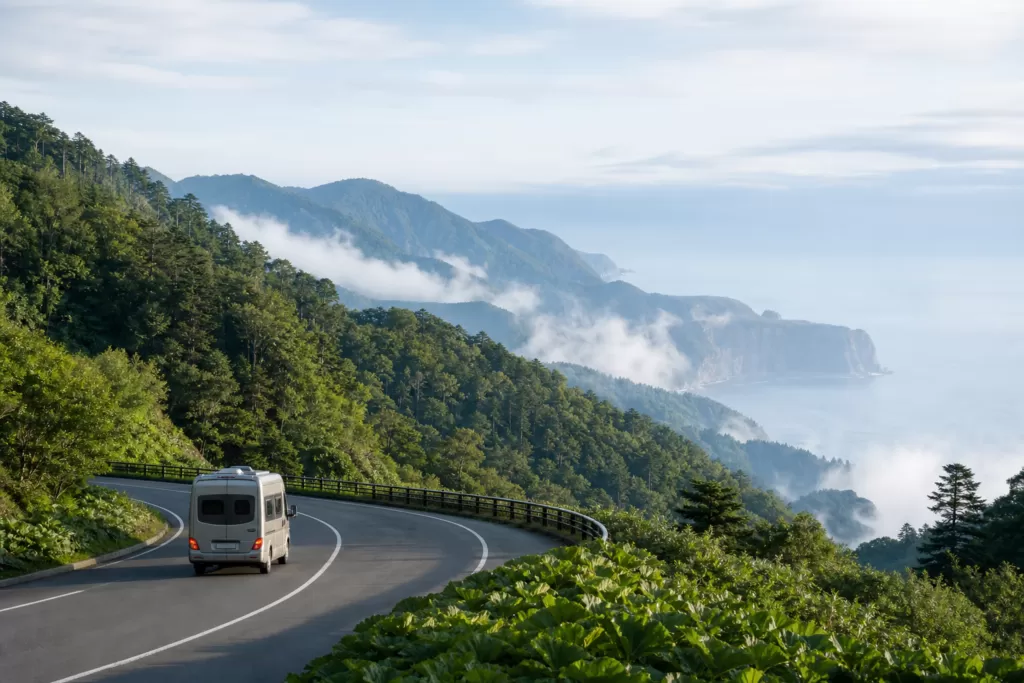
Shiretoko is one of the few places in Japan where you can get genuinely close to wild nature. A UNESCO World Heritage Site with old-growth forest, brown bears walking the coastline, and a fishing port that opens after the sea ice clears — this is the kind of place that suits campervan travel perfectly. The reason is simple: accommodation in Shiretoko is limited and in peak summer, lodgings book out weeks ahead. With a campervan, you can base yourself at a nearby campsite and move at your own pace.
This guide covers the key sights, campsites, an eastern Hokkaido circuit itinerary, and cost estimates for a campervan trip to Shiretoko and Utoro. New Chitose Airport is about 390km from Utoro, and keeping each day within 200km of driving means two days each way, so plan on at least 5 nights. For rental options, see our top 15 Hokkaido campervan rentals. First-timers should also check the beginner’s guide.
Compare Hokkaido Campervan Rentals
Base yourself at New Chitose Airport and compare rates, vehicle types, and pickup locations all in one place.
Compare rental companies and rates →Tap a dot on the map to see its name here.
Tap a dot to see its name and a link to where it appears in this article. 2 places whose location could not be confirmed are not shown. Dot positions are based on each facility’s address or officially published location. Lakes and expressways are from OpenStreetMap data.
Getting to Shiretoko: Access and Basics
The gateway to Shiretoko Peninsula is Utoro (Shari Town). From New Chitose Airport via the Doto Expressway and Route 244, it's approximately 4.5–5 hours. This is a long drive, so stopping en route at Lake Akan, Kushiro, or Lake Mashu is the standard approach for an eastern Hokkaido trip.
Shiretoko Peninsula has two sides: the Utoro side (Sea of Okhotsk, Shari Town) and the Rausu side (Nemuro Strait, Rausu Town), connected by Shiretoko Pass (National Route 334). The pass is typically closed from early November through late April — check the schedule before planning.
Driving Notes for Campervan Visitors
During summer, a private vehicle restriction ("Shiretoko Go-ko Shutter Regulation") applies to the road toward Shiretoko Five Lakes and Kamuiwakka Falls area. During the restriction period, vehicles must park at the designated lot and take a shuttle bus (shuttle fee applies, as of June 2026). This measure exists to prevent brown bear incidents. Check the exact dates and rules on the Ministry of the Environment's Shiretoko website before your trip.
Some forest roads toward the cape are unpaved with sharp curves, and can be difficult for cabovers or large campervans. The Shiretoko Pass road (from Utoro to Rausu) reaches 738m elevation with two-way passing required in places. Take it slowly in large vehicles.
Core Sights: Five Lakes, the Pass, the Cruise
Shiretoko Five Lakes
Five small lakes scattered through old-growth forest. Two trail options: the elevated boardwalk (free, 800m, protected from bears by electric fence) and the ground trail (requires pre-registration or a guide when bears are active, with entry rules and fees that vary by season — as of June 2026). The elevated boardwalk gives a clear view of Mt. Rausu reflected in the first lake. On fine mornings, the view is worth an early start — some periods allow entry from 5am, and staying the night before at a campsite near Shiretoko Five Lakes puts you in position for first entry.
Shiretoko Pass
The highest point on the Shiretoko Crossing Road (738m). On clear days, the view takes in Mt. Rausu directly ahead and sometimes extends to Kunashiri Island. Free parking with space for campervans (as of June 2026). Fog is common in early morning and evening — but fog on the pass has its own atmosphere. Winter closure typically runs November through April.
Utoro Sightseeing Cruise
Boats departing from Utoro Port offer the best way to see Shiretoko from the sea. Main options: Cape Shiretoko Course (3–4 hours) and Rusha/Kashuni Falls Course (about 1.5 hours). Prices, schedules, and vessel types vary by operator — check before June 2026 figures. Brown bears sometimes appear walking along the shoreline from the boat. Weather-dependent cancellations happen; building in a buffer day is wise.
Rausu Fishing Port and Seafood
Cross the pass to the Rausu side and you'll reach Rausu Port. Known for Rausu kelp, atka mackerel, and autumn salmon — the direct sales at the port and local shops carry fresh catch. With a campervan refrigerator, buying fresh sea urchin or sashimi and eating at a nearby campsite is a natural part of the trip. In autumn, guided tours around Utoro also let you watch salmon run up the rivers; see Watching the Salmon Run in Hokkaido by Campervan for timing and how to book.
"Michi-no-Eki Shiretoko Rausu" is a popular stop — fresh seafood dining and take-home products, with large vehicle parking available (as of June 2026).
Campsites and RV Parks Near Shiretoko and Utoro
Accommodation around Shiretoko is limited and popular campsites fill quickly in summer. Booking 1–2 months ahead is advisable.
| Site name | Location | Type | Power | Approx. rate | Notes |
|---|---|---|---|---|---|
| Utoro Campsite (near Shiretoko Nature Center) | Shari, Utoro | Auto campsite | Some sites | ¥2,000–¥3,500/night (June 2026) | Close to Utoro sightseeing base |
| Iwaubetsu Auto Campsite | Shari, Iwaubetsu | Auto campsite | None | ¥1,000–¥2,000/night (June 2026) | Near Five Lakes and Shiretoko Pass |
| Rausu Wildlife Camp | Rausu Town | Free-site | None | ¥500–¥1,000 (June 2026) | Walking distance to Rausu Onsen and Kuma-no-Yu |
| RV Park near Michi-no-Eki Shari | Shari Town | RV park | Available | From ¥2,000/night (June 2026) | Stopover point en route to Utoro |
Always check pricing and booking directly with each facility. When bear activity warnings are in effect, food storage in vehicles (sealed containers) and proper waste disposal are essential at campsites.
Separate from the RV park near Michi-no-Eki Shari listed above, what the Michi-no-Eki Shari and Utoro Shirietoku roadside stations themselves officially say about overnight parking is covered in Can You Sleep in Your Van at Michi-no-Eki Shari or Utoro Shirietoku? Official Check and Where to Stay Around Shiretoko.
Hot Springs Near Shiretoko and Rausu
- Kuma-no-Yu (Rausu): Free wild hot spring. Separated by gender, no swimwear. Ask locals about temperature before entering — it runs very hot.
- Rausu Onsen, Hotel Mine-no-Yu: Day-use bathing available (from ¥800, as of June 2026).
- Utoro Onsen (e.g. Shiretoko Grand Hotel Kitakobushi): Clifftop baths overlooking the sea are popular. Day-use bathing may be turned away during busy periods — call ahead.
Eastern Hokkaido Circuit Itinerary
Rather than driving straight to Shiretoko from New Chitose, combining Shiretoko with other eastern Hokkaido highlights makes for a more rewarding trip. Here's a 6-night 7-day model route. Each day stays within 200km and 9 hours of driving (including breaks), for about 1,040km in total. If you want to add Lake Shikaribetsu, it's about 120km round trip from Obihiro, so add one more night in Tokachi.
6 Nights 7 Days: Eastern Hokkaido and Shiretoko Circuit
| Day | Itinerary | Overnight | Approx. distance |
|---|---|---|---|
| Day 1 | New Chitose → Doto Expressway → Obihiro (lunch, pork rice bowl) → Tokachigawa Onsen | Obihiro/Tokachigawa area | approx. 170km |
| Day 2 | Ashoro → Lake Akan → Lake Kussharo | Lakeside campsite at Lake Kussharo | approx. 170km |
| Day 3 | Lake Mashu (1st viewpoint) → Kawayu Onsen (day-use bath) → Arrive Utoro → Shiretoko Nature Center → Utoro campsite | Near Utoro | approx. 130km |
| Day 4 | Early morning Five Lakes (elevated boardwalk) → Shiretoko sightseeing cruise → Shiretoko Pass → Rausu (port, seafood) → Kuma-no-Yu → Rausu camp | Rausu Town | approx. 60km |
| Day 5 | From Rausu via Routes 335 and 244 → Abashiri (drift ice museum) → Bihoro | RV Park Toge no Yu Bihoro (Bihoro) | approx. 180km |
| Day 6 | Bihoro → via Tsubetsu and Rikubetsu to Tokachi | RV Park Tokachi Makiba no Ie (Ikeda) | approx. 140km |
| Day 7 | Tokachi → Doto Expressway → Return to New Chitose | (Return) | approx. 190km |
Lake Mashu is famous for its fog — if it's foggy, the lake surface is completely hidden. Clear early mornings give the best views. Lake Kussharo's Sunayu (dig in the sand and hot spring water wells up — free) is an unusual experience worth the stop.
Cost Estimate
| Item | Estimate (2 people, 6N7D) | Notes |
|---|---|---|
| Campervan rental | ¥168,000–¥280,000 | 6 nights, campervan to cabover |
| Fuel | ¥22,000–¥26,000 | Est. 1,040km total |
| Campsite and RV park fees | ¥9,000–¥21,000 | 6 nights × ¥1,500–¥3,500 |
| Food | ¥21,000–¥35,000 | Including Rausu seafood and Obihiro pork rice bowl |
| Admission, cruise, hot springs | ¥5,000–¥10,000 | Cruise + Five Lakes + hot springs for 2 |
| Total estimate | ¥225,000–¥372,000 | 2-person total; varies widely |
Eastern Hokkaido distances add up — fuel costs are higher than in other regions. Locate fuel stops in advance (especially in Shiretoko, where stations are few). Fill up fully before entering Utoro.
Practical Information
Fuel in Shiretoko
Very few petrol stations on the Shiretoko Peninsula itself. Utoro (Shari Town) has stations, but some close early. Fill up completely before entering the peninsula. Same applies on the Rausu side. In eastern Hokkaido generally: fuel up whenever you reach a town — Teshikaga, Kiyosato, Shari all have stations.
Brown Bear Precautions
Brown bear sightings occur throughout Shiretoko year-round. At campsites, food management is critical: never leave food, cooking equipment, or waste outside the vehicle. Strongly-scented items (meat, fish, fruit) should be stored in sealed containers or bear canisters inside the vehicle. Some campsites provide food storage lockers; others don't.
If you encounter a bear: don't run, maintain eye contact, back away slowly. Shiretoko Nature Center posts up-to-date bear sighting information on arrival. The Shiretoko Foundation also publishes incident reports online (as of June 2026) — check before you go.
Where to Buy Groceries
Utoro has a Seicomart (as of June 2026). Hokkaido's local convenience chain Seicomart carries a good range of groceries including local produce and ready meals. For larger shopping, Shari Town (about 30km from Utoro) has a proper supermarket. Rausu side also has a Seicomart. Stock up at larger towns before entering the peninsula.
Weather and Planning
Shiretoko and eastern Hokkaido summers are cool, often 10°C+ cooler than Tokyo in peak summer. But fog and rain are common. Shiretoko Pass fogs over especially easily, and the lake views at Mashu are famously unreliable. Build alternative plans — "if it's foggy here, what's nearby that still works?" — into your schedule. This flexibility is one of the strengths of campervan travel.
Vehicle Choice for Shiretoko
A HiAce-based campervan strikes the best balance of range, fuel economy, and maneuverability for eastern Hokkaido. For groups of 4–5, a cabover offers better comfort for sleeping and meals. The Shiretoko Pass has a noticeable grade — a petrol cabover with stronger engine pull tends to feel more stable on the climb.
Emergency Contacts
Mobile coverage drops in deep parts of Shiretoko Peninsula (as of June 2026). Route 334 and Utoro town centre generally have signal; forest roads and toward the cape go dark. Note: Shari Police (0152-23-0110), Rausu Police (0153-87-2019). Shiretoko Nature Center can also assist in emergencies.
FAQ
Q: Is there a high chance of seeing brown bears in Shiretoko?
A: In managed tourist areas (Five Lakes, Nature Center vicinity), it's possible to see bears at a safe distance when conditions are right. Leaving trails, going out alone at night, or mishandling food near campsites raises the risk of an encounter. Store food properly and don't leave anything edible outside the vehicle.
Q: Can campervans access Shiretoko Five Lakes?
A: During the private vehicle restriction period in summer, you must park at the designated lot and transfer to the shuttle bus. Campervans can use the car park, but space is limited — arriving early is recommended. Outside the restriction period (autumn/spring), you can drive directly.
Q: Do the sightseeing boats require advance booking?
A: Walk-up is sometimes possible, but booking 1–2 days ahead is safer for the boat and time you want. Multiple operators run different courses — compare before booking (as of June 2026).
Q: Can campervans drive Shiretoko Pass?
A: Yes. Take it slowly on the steep curves. Be extra cautious when fog is heavy (typically early morning and evening). Winter closure runs approximately November through April.
Q: How long from New Chitose to Shiretoko (Utoro)?
A: About 4.5–5 hours and roughly 390km via the Doto Expressway and national routes (as of June 2026). That's beyond the 200km / 9-hour daily driving guideline (including breaks), so don't do it in one day — stop overnight in Obihiro or the Lake Mashu area.
Compare Hokkaido Campervan Rentals
Base yourself at New Chitose Airport and compare rates, vehicle types, and pickup locations all in one place.
Compare rental companies and rates →Book a Campervan in Hokkaido
Moving Inn New Chitose Airport supports English booking and offers airport transfers.

![When and Where Can You See Harbor Seals at Cape Erimo? Kaze no Yakata Official Information, Viewing Season, and Windy-Day Notes [2026-27]](https://hokkaido-campingcar.jp/wp-content/uploads/2026/10/erimo-cape-lighthouse-768x511.jpg.webp)
![Where and Under What Conditions Can You See Diamond Dust in Hokkaido? How Cold a Morning It Takes, and Where It Appears [2026-27]](https://hokkaido-campingcar.jp/wp-content/uploads/2026/10/hokkaido-diamond-dust-nayoro-768x512.jpg.webp)
![Can You Drive to Hokkaido Jingu for Hatsumode? Parking, Crowds, and Where to Park and Walk [2027]](https://hokkaido-campingcar.jp/wp-content/uploads/2026/10/hokkaido-jingu-winter-torii-768x504.jpg.webp)
![Hokkaido Roads Over New Year [2026-27] | Expressway Sections Prone to Blizzard Closures, Forecast Congestion Days, No Holiday Discount, and New Chitose Airport Parking](https://hokkaido-campingcar.jp/wp-content/uploads/2026/10/hokkaido-winter-rural-road-edge-markers-768x432.jpg.webp)
![Where to See Sea Smoke (Kearashi) in Hokkaido: Rumoi’s Ogon-misaki and the Morning Conditions [2026-27]](https://hokkaido-campingcar.jp/wp-content/uploads/2026/10/rumoi-kearashi-sea-smoke-768x511.jpg.webp)
![Geminid Meteor Shower 2026 in Hokkaido: Peak Around 23:00 on December 14, Sapporo Moonset 20:40, and Staying Warm in a Winter Campervan [2026]](https://hokkaido-campingcar.jp/wp-content/uploads/2026/10/geminids-2026-hokkaido-768x575.jpg.webp)