Asahikawa Winter Festival 2027: Dates, Venues, Highlights, and Where to Park by Car
Asahikawa Winter Festival 2027 runs Feb. 6–11. Only dates are official, so see the 2026 venues, snow art, fireworks, food, clothing, and car parking and access.
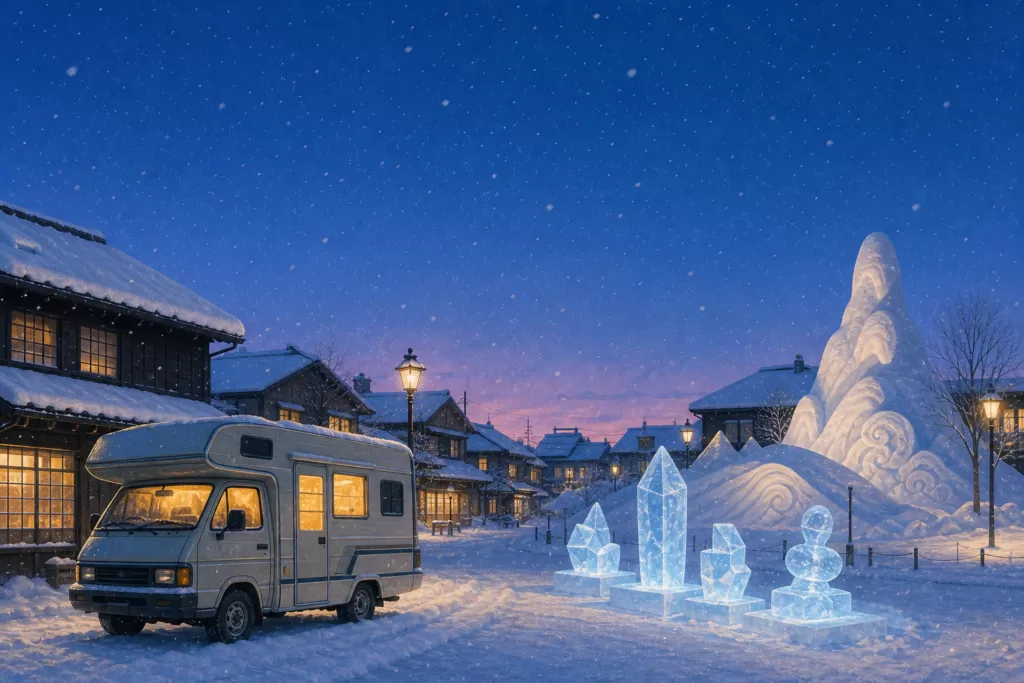
The 2027 Asahikawa Winter Festival (the 68th) runs for six days, from Saturday, February 6 to Thursday, February 11 (a national holiday). The organizers have announced only that the festival will go ahead and its dates; venues, hours, and program have not been released yet (Asahikawa Winter Festival official site, checked 2026-10-07).
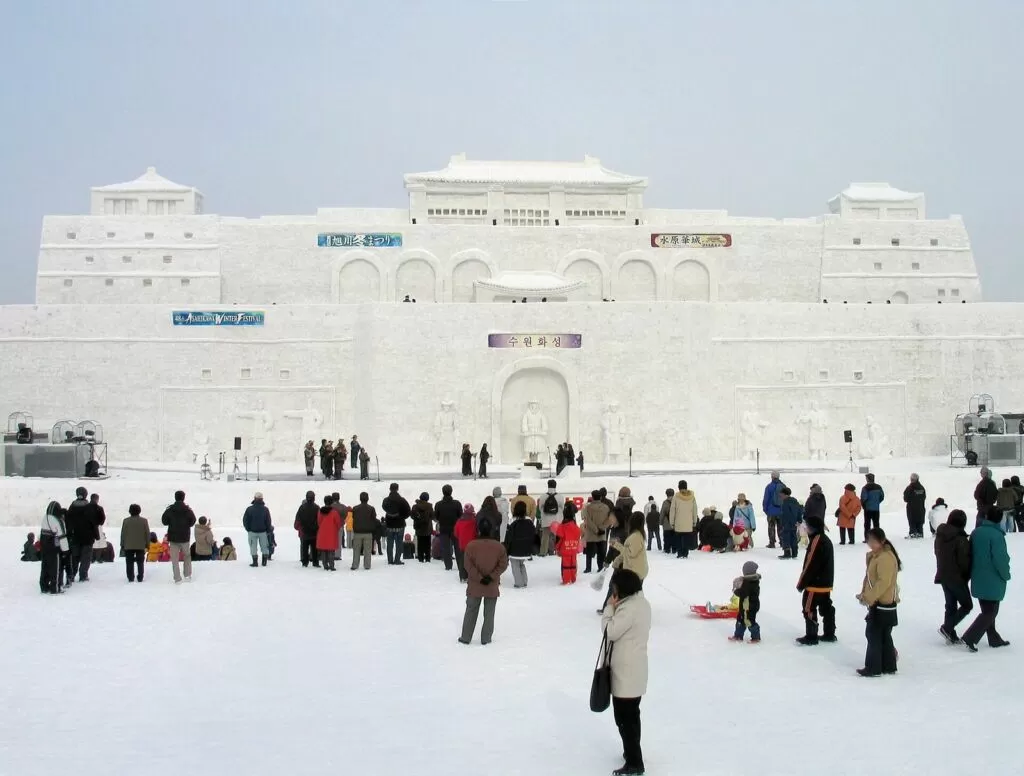
This article builds on the official announcements for the most recent festival, the 67th (2026), and lays out what you can see, when and where to enjoy it, and where to park if you come by car. Please read the 2027 details as subject to replacement once the organizers publish them.
First, a word for drivers. According to the official guidance for the 67th festival, there was no parking lot at the venue, the surrounding roads were no-parking zones, and no shuttle bus ran (Please read before you visit (official, in Japanese), checked 2026-10-07). The parking plan is covered in a later section.
Going to the Asahikawa Winter Festival?
- Where to rent: Renting at Asahikawa Airport is the straightforward option in terms of distance. It is about 15 km to JR Asahikawa Station, or about 30 minutes by car without snow (longer on snowy roads).
- Where to stay: There is no parking inside the venue. In and around Asahikawa there are facilities with power hookups, such as RV parks, but winter operation and availability change by year and period (see the section below, “How do you stay overnight in your vehicle in sub-zero Asahikawa? Secure where you will sleep first”).
Compare Hokkaido Campervan Rentals
Base yourself at New Chitose Airport and compare rates, vehicle types, and pickup locations all in one place.
Compare rental companies and vehicles →When is the 2027 Asahikawa Winter Festival? Six days, February 6 (Sat) to 11 (Thu, holiday)
The 2027 dates were announced in an official notice dated February 17, 2026. It gives no venue, opening hours, or program. The contact is the Asahikawa Winter Festival Executive Committee (0166-25-7168) (official notice, checked 2026-10-07).
| Edition | Dates | What the organizers announced |
|---|---|---|
| 67th (2026) | Feb. 6 (Fri) to 11 (Wed, holiday), six days, 10:00–20:00 | Venues: the Ishikari River Asahibashi riverside venue, the Asahikawa Heiwa-dori Shopping Park venue, and others. Actual results |
| 68th (2027) | Feb. 6 (Sat) to 11 (Thu, holiday), six days | Only the decision to hold the festival and its dates. Venues, hours, and program to be announced |
The 2027 Sapporo Snow Festival runs February 4 (Thu) to 11 (Thu, holiday), overlapping with the Asahikawa festival (Sapporo Snow Festival official site, checked 2026-10-07). For places to park in Sapporo, see our guide to Snow Festival parking and overnight bases.
If you want to link Sapporo and Asahikawa in one trip, our 10-day winter Hokkaido model route includes an example departing on February 5.
The opening day can change with the weather. In 2026, a blizzard warning was issued on the first day, February 6; all stage events were canceled, and the fireworks were postponed to February 8 (official notice, cancellation notice, checked 2026-10-07). It is safer not to pack too much into the first day.
Where is the venue? Two areas: the Ishikari River riverside at Asahibashi, and Heiwa-dori Shopping Park running from the station
The venues for the 67th festival were the “Ishikari River Asahibashi riverside venue,” the “Asahikawa Heiwa-dori Shopping Park venue,” and others (official overview, checked 2026-10-07). The roles are split: the snow sculptures and stage are at the riverside, and the ice sculptures are in the shopping park.
| Venue | Main features (67th edition results) |
|---|---|
| Ishikari River Asahibashi riverside venue | The large snow sculpture, stage, winter marché, “Hot Lounge” food and rest booths, a giant snow maze, medium-sized snow sculptures |
| Asahikawa Heiwa-dori Shopping Park venue | Display of works from the Ice Sculpture World Championship (Miyashita-dori to 7-jo-dori), evening illumination |
From JR Asahikawa Station to the foot of Asahibashi bridge, OpenStreetMap road data gives about 2.0 km, or about 26 minutes on foot (calculated 2026-10-07; it takes longer on snowy roads). The ice sculpture display starts at Miyashita-dori in front of the station, so the natural route is to walk toward the riverside venue while viewing the ice sculptures.
The Asahikawa City Central Library and the Asahikawa City Tokiwakan (inside Tokiwa Park) were listed as “public facilities near the venue” where restrooms could be used (facility guide, checked 2026-10-07).
What can you see? The large snow sculpture, a giant snow maze, medium snow sculptures, and lanterns that glow at night
The Asahikawa Winter Festival has run since the first edition in February 1960. The organizers describe today’s festival as a “celebration of snow, ice, and light,” and say its hallmark is the world’s largest snow sculpture, which was once recognized by Guinness (history of the festival, checked 2026-10-07).
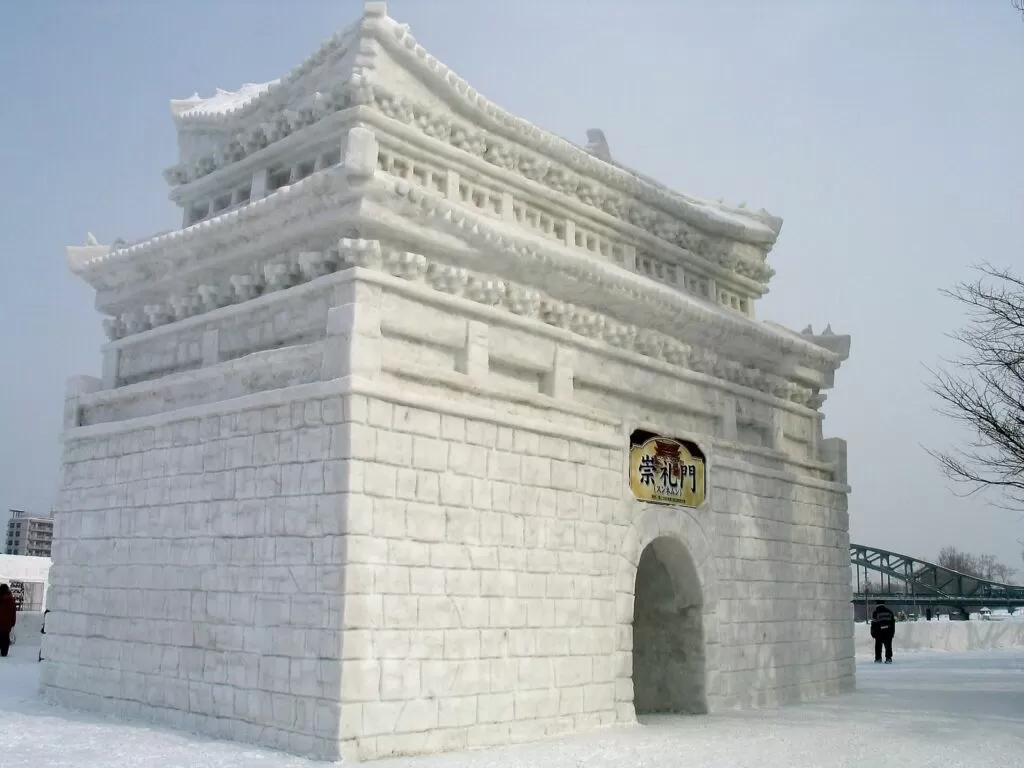
The 67th festival’s large snow sculpture was a design of Alolan Vulpix and Vulpix set against Asahibashi bridge and the Daisetsuzan mountains, roughly 120 m wide, 19 m deep, and 12 m high (approximate).
A snow sculpture of a Pokémon manhole cover (“Poké Lid,” about 2 m × 2 m) and a Poké Ball snow sculpture (about 2.3 m × 2.3 m) were also on display (official snow sculpture introduction, checked 2026-10-07). The theme of the large snow sculpture changes every year.
In 2024, the subject was the Slime, Drakee, and Dragonlord from “Dragon Quest” (past Asahikawa Winter Festivals, checked 2026-10-07). The 2027 design has not been announced.
Other highlights are as follows (all from the 67th edition, checked 2026-10-07).
- Giant snow maze: a round maze with 2 m-high snow walls, featuring Asahikawa’s cityscape and Vulpix. Admission is accepted from 10:00 to 18:30, and on fireworks days it may close earlier (official)
- Medium snow sculpture contest and High School Snow Sculpture Koshien: snow sculptures by local companies, groups, and high school students (sculpture introduction)
- Kon Kon Vulpix lanterns: a photo spot that greets visitors at the entrance (Asahibashi side) and lights up at night. About 57.5 cm wide × 75 cm high (official)
- Stamp rally: visit five spots around Asahikawa Station and the shopping park. Stamp cards are first-come, first-served, and end when they run out (official)
Snow and ice sculptures are fragile, and the organizers ask visitors not to climb on or touch them.
When and where can you see the Ice Sculpture World Championship? In 2026, display on Feb. 8–11, with illumination from the evening
The Ice Sculpture World Championship is an exhibition of ice works held in the shopping park. In the 67th edition, 38 pieces competed. Carving ran from February 6 to 8 (for the individual category, 38 hours until 8:00), and the display ran from February 8 to 11, from Miyashita-dori to 7-jo-dori.
The works were illuminated from 16:30 to 23:00 on the 8th to the 10th, and from 16:30 to 22:00 on the 11th (Ice Sculpture World Championship official site, checked 2026-10-07).
To see the carving in progress, aim for the first half of the competition; to see finished works at night, aim for the display period. The 2027 competition schedule has not been announced, just like the main festival. Judging from 2026, the display begins on the third day of the Winter Festival.
What is there at night? Fireworks, a DJ set, and the night snow sculpture stage
In the 67th edition, there was a DJ set every night from 18:00 called “Electrical Night Fever,” where visitors lit up the venue with glowing items and phone lights (official, checked 2026-10-07).
The “Winter Fireworks” ran on three days, starting at 19:30 on February 6 and 7, and at 19:40 on February 11. They may be canceled because of weather, and watching from someone’s shoulders is prohibited (official, checked 2026-10-07).
On the final day, February 11, at 19:30, a “SPECIAL NIGHT STAGE” was held at the large snow sculpture stage (official).
How many days of fireworks and stage shows there will be in 2027 depends on the announcement. Fireworks days are crowded, so if you want to see them, it is easier to get into the venue by the early evening.
What is there to eat? A winter marché with 42 stalls, and a lounge where you can sit
The 67th edition’s “Winter Marché” ran from 10:00 to 20:00 with 42 stalls. Offerings included grilled scallop skewers, Genghis Khan (grilled lamb), zangi (Hokkaido-style fried chicken), cut steak of Asahi Takasago beef, soup curry, and Asappy-yaki (official stall list, checked 2026-10-07).
The place to eat is the “Hot Lounge” on the Asahibashi side (10:00–20:00). It is divided into a “relaxing rest area” and a “standing area,” and there were also dining tents for ramen and soba. The organizers ask visitors to share the space, since it gets crowded at certain times (facility guide, checked 2026-10-07).
Can you go with children? Admission, restrooms, nursing rooms, and the rules to follow
We could not find any admission fee or paid-area notice on the 67th edition’s official pages (checked 2026-10-07). The maze and snow sculpture pages also list no fees. Please check the official site for how 2027 will be handled once it is announced.
The facilities at the 67th festival were as follows (facility guide, checked 2026-10-07).
- Venue restrooms: temporary units on the Asahibashi side, with 4 women-only stalls, 10 shared stalls, and 1 barrier-free stall
- Nursing and diaper changing: there is a lockable space inside the “Hot Lounge,” and the Asahikawa City Central Library can also be used
- Asahikawa City Central Library: Tuesday to Friday 9:30–19:00, weekends and holidays 9:30–18:00. Closed on Mondays (in 2026, February 9, during the festival, was a closure day)
Please also keep the rules in mind. Pets are not allowed, except for service dogs. Drone photography, entering before opening, and watching from someone’s shoulders are also prohibited. Some attractions, such as the character greetings, require a numbered ticket (Please read before you visit (official, in Japanese), Greeting, checked 2026-10-07).
When is it less crowded? There are no official crowd figures, so think in terms of time of day
The official pages we checked did not list visitor numbers. What we could confirm are the situations where crowding tends to occur. The organizers say the lounge gets crowded at certain times, and that on fireworks days the maze may stop accepting visitors early (facility guide, maze, checked 2026-10-07).
| Time of day | What the 67th edition tells us |
|---|---|
| Right after the 10:00 opening | You cannot enter the venue before opening (before 10:00). A good time to see the snow sculptures and maze at a relaxed pace |
| Midday to late afternoon | The winter marché and lounge are in full swing. On Saturday, February 7, the TOSHIBA Winter Stage started at 14:00 |
| From 16:30 | The ice sculptures in the shopping park are illuminated |
| From 18:00 | A DJ set every night. Fireworks around 19:30 |
If you want to go at a quieter time, an easy plan is to tour the snow sculptures and maze right after opening, then move to the ice sculptures in the evening. If you want to avoid fireworks days, wait until the 2027 fireworks schedule is announced.
How cold is it, and what should you wear? Early February in Asahikawa stays below freezing even by day, and mornings and evenings are around -13°C
According to the Japan Meteorological Agency’s climate normals (1991–2020), in the first ten days of February Asahikawa’s average daily high is -3.0°C and its average daily low is -13.1°C. The monthly average low for February was -11.8°C (JMA, Asahikawa ten-day normals, monthly normals, checked 2026-10-07). These are typical-year guides, not a forecast for the day.
The organizers recommend non-slip soles on your shoes, a hat and gloves, and clothing that limits injury if you fall. They also warn that crosswalks outside the venue are slippery and that the steps where road heating ends make it easy to fall (Please read before you visit (official, in Japanese), checked 2026-10-07).
For how to read temperatures and what to bring for overnight stays in your vehicle, see our article on Hokkaido winter temperatures.
With a campervan, you can change into heavier layers before heading to the venue, then return to the vehicle to warm up with a hot drink. Keep in mind that, because you cannot bring the vehicle close to the venue, the place you return to will be some distance away.
How do you get to the venue? Bus or taxi from the station; by car, use a flat parking lot near the station
The official access guide for the 67th festival said there was no parking lot at the venue and asked visitors to come by public transport. No shuttle bus ran; the guidance was to use regular route buses (Asahikawa Electric Railway, Dohoku Bus) or a taxi. There is a taxi stand in front of JR Asahikawa Station, and there was also a taxi drop-off point inside the venue.
Tour buses had a dedicated parking lot, and no reservation was needed (official access page, checked 2026-10-07).
If you come by car, drop the idea of driving up close to the venue; the plan is to leave the vehicle in the city and either walk or take a bus. If you park around Asahikawa Station, the ice sculpture display is right in front of you and the riverside venue is within walking distance.
Winter parking comes with snow-country conditions: snow piles from plowing reduce the number of spaces, space markings get buried under snow, and some lots have snow removal at night or early in the morning. Which lots will have space during the festival depends on snowfall and the time of day, so this article does not make any promises.
It helps to decide in advance to arrive early to match the opening, and to switch to a flat lot farther from the station if the first one is full.
Campervans often cannot enter multi-story car parks, where the height limit is commonly around 2.1 m, and even a vehicle with a low roof will be stopped at the entrance unless you check the actual height including the roof rack and antenna. If your vehicle is taller than 2.1 m, consider only flat lots.
A vehicle longer than 5 m tends to stick out at the front and back even when it fits a space, so it is easier to pick a large flat lot, or to park at the edge of the city and take a bus.
Michi-no-Eki Asahikawa (Kagura, Asahikawa) is a roadside station on the city side with a large flat parking lot, about 2.9 km from the foot of Asahibashi bridge (about 38 minutes on foot, calculated 2026-10-07). However, a Michi-no-Eki lot is a place for rest breaks, not a place that promises long-term parking for festival visitors.
Crowding during the festival is also hard to predict, so please judge by the situation on site.
Where do you rent a vehicle? Pick up at Asahikawa Airport and plan your winter driving
If you are coming from outside Hokkaido, renting at Asahikawa Airport is the straightforward option in terms of distance. From Asahikawa Airport to JR Asahikawa Station is about 15 km, or about 30 minutes by car without snow (calculated from OpenStreetMap road data (OSRM), 2026-10-07). It takes longer on snowy roads.
For how to pick up a vehicle and which bases are available, see how to rent a campervan at Asahikawa Airport, and for the companies you can rent from in Asahikawa, see the 6 companies renting campervans in Asahikawa.
Around Asahikawa at this time of year, the ground is under settled snow, and packed snow and icy roads are normal. Even when a vehicle is rented with winter tires, its weight makes the braking distance longer than a regular car’s, and visibility drops in a blizzard. If you are not used to snowy roads, do not plan long drives after sunset.
We plan each day’s driving to stay within this site’s guideline of “200 km and 9 hours of driving” (this is not an official standard). For driving and equipment, see the complete winter driving guide, and for a breakdown of common concerns, see worries about snowy roads, ice, and heating.
How do you stay overnight in your vehicle in sub-zero Asahikawa? Secure where you will sleep first
As a rule, secure in advance a facility that explicitly accepts overnight stays in vehicles. In and around Asahikawa there are facilities with power hookups, such as RV parks, but winter operation and availability change by year and period. Please check with the booking site or by phone before you leave.
Facilities where we could confirm winter operation are collected in 13 RV parks and Michi-no-Eki where you can stay overnight in winter. Please avoid staying overnight in parking lots or Michi-no-Eki that do not explicitly accept it, because it gets in the way of snow removal at night.
There are three points for cold-weather preparation. First, FF heater fuel. In deep winter, the fuel left is directly how long the heating lasts, so get close to a full tank by the evening. Second, insulation. With window insulation and a layered winter sleeping bag and blankets you can sleep even at double-digit sub-zero temperatures, but going into the night with half-prepared equipment is dangerous.
Third, never sleep with the engine running. If snowfall buries the tailpipe, exhaust gas can flow into the cabin.
This is a season when the fresh water tank and plumbing can freeze even while driving. Confirm at the time of booking the rental whether you will drain the water and operate without it, or whether the vehicle has freeze protection, so you are not caught out on site.
New Chitose Airport / Tokachi-Obihiro Airport
See Moving Inn Campervans
Check vehicle types, rates, and availability on the official site.
See details at Moving Inn →What to do before and after the festival? Asahiyama Zoo, the Sounkyo Ice Falls Festival, and the Sapporo Snow Festival
Asahiyama Zoo’s 2026–27 winter season opens on Wednesday, November 11, 2026. It is closed from November 4 to 10. We could not read the winter opening hours from the official notice, so please check before you go (Asahikawa City Asahiyama Zoo, checked 2026-10-07).
Bases nearby are covered in the Asahiyama Zoo guide.
The Sounkyo Onsen Ice Falls Festival in 2027 runs from Saturday, January 23 to Sunday, March 7, overlapping with the Winter Festival dates. The 2027 illumination hours have not been posted (Sounkyo Onsen Ice Falls Festival official site, checked 2026-10-07). For highlights between Asahikawa and Sounkyo, see our Sounkyo Ice Falls Festival article.
If you want to line up several winter festivals in one trip, Hokkaido winter events (2027) lists the dates and whether each venue has parking.
Frequently asked questions (FAQ)
When is the 2027 Asahikawa Winter Festival?
The 2027 festival (the 68th) runs for six days, from Saturday, February 6 to Thursday, February 11 (a national holiday). Only the decision to hold it and its dates have been announced; venues, hours, and program have not (Asahikawa Winter Festival official, checked 2026-10-07).
Where is the venue?
The 67th festival (2026) used the Ishikari River Asahibashi riverside venue, the Asahikawa Heiwa-dori Shopping Park venue, and others. Please wait for the announcement of the 2027 venues (official, checked 2026-10-07).
What can you see?
The 67th festival had a large snow sculpture about 120 m wide, a giant snow maze, medium snow sculptures, lanterns that light up at night, and ice sculptures in the shopping park. The theme of the large snow sculpture changes every year (official, checked 2026-10-07).
When can you see the ice sculptures?
In 2026, the display ran from February 8 to 11, with illumination from 16:30 in the evening. The 2027 schedule has not been announced (Ice Sculpture World Championship official, checked 2026-10-07).
Are there fireworks or evening events?
In 2026, there were fireworks on three days (planned for February 6, 7, and 11) and a DJ set every night from 18:00. Events may be canceled or postponed because of weather (official, checked 2026-10-07).
Is there an admission fee?
We found no mention of an admission fee or paid areas on the 67th festival’s official pages (checked 2026-10-07). Please check the official site for how 2027 will be handled once it is announced.
When is it less crowded?
We could not confirm official visitor numbers. The organizers say the lounge gets crowded at certain times and that on fireworks days the maze may stop accepting visitors early. Right after opening is the easiest time to move around (official, checked 2026-10-07).
What should you wear?
In the first ten days of February, Asahikawa’s normals are an average daily high of -3.0°C and an average daily low of -13.1°C. The organizers recommend non-slip soles, a hat, and gloves (JMA and official, checked 2026-10-07).
Is there parking at the venue? Is there a shuttle bus?
At the 67th festival there was no parking lot at the venue, the surrounding roads were no-parking zones, and there was no shuttle bus. The plan is to park in a flat lot in the city and go on foot, by route bus, or by taxi. Campervans often cannot enter multi-story car parks, so assume a flat lot (official, checked 2026-10-07).
Can I bring a pet?
Pets such as dogs and cats cannot be brought in, except for service dogs (67th festival visitor notice, checked 2026-10-07). In sub-zero Asahikawa the temperature inside a vehicle drops quickly, so making a pet wait a long time without heating is dangerous.
Pages to read next
- 14 Hokkaido winter events on a map and calendar | 9 overlap on February 6
- Sapporo Snow Festival by campervan | parking and overnight bases near the venues
- Sounkyo Ice Falls Festival by campervan | illumination and winter overnight stays
- Asahikawa and Asahiyama Zoo campervan guide
- A 10-day model route around winter Hokkaido
Photo credits: 京浜にけ at Japanese Wikipedia (CC BY-SA 3.0, Wikimedia Commons) / 京浜にけ (CC BY 3.0, Wikimedia Commons)
Book a Campervan in Hokkaido
Moving Inn New Chitose Airport supports English booking and offers airport transfers.

![When and Where Can You See Harbor Seals at Cape Erimo? Kaze no Yakata Official Information, Viewing Season, and Windy-Day Notes [2026-27]](https://hokkaido-campingcar.jp/wp-content/uploads/2026/10/erimo-cape-lighthouse-768x511.jpg.webp)
![Where and Under What Conditions Can You See Diamond Dust in Hokkaido? How Cold a Morning It Takes, and Where It Appears [2026-27]](https://hokkaido-campingcar.jp/wp-content/uploads/2026/10/hokkaido-diamond-dust-nayoro-768x512.jpg.webp)
![Can You Drive to Hokkaido Jingu for Hatsumode? Parking, Crowds, and Where to Park and Walk [2027]](https://hokkaido-campingcar.jp/wp-content/uploads/2026/10/hokkaido-jingu-winter-torii-768x504.jpg.webp)
![Hokkaido Roads Over New Year [2026-27] | Expressway Sections Prone to Blizzard Closures, Forecast Congestion Days, No Holiday Discount, and New Chitose Airport Parking](https://hokkaido-campingcar.jp/wp-content/uploads/2026/10/hokkaido-winter-rural-road-edge-markers-768x432.jpg.webp)
![Where to See Sea Smoke (Kearashi) in Hokkaido: Rumoi’s Ogon-misaki and the Morning Conditions [2026-27]](https://hokkaido-campingcar.jp/wp-content/uploads/2026/10/rumoi-kearashi-sea-smoke-768x511.jpg.webp)
![Geminid Meteor Shower 2026 in Hokkaido: Peak Around 23:00 on December 14, Sapporo Moonset 20:40, and Staying Warm in a Winter Campervan [2026]](https://hokkaido-campingcar.jp/wp-content/uploads/2026/10/geminids-2026-hokkaido-768x575.jpg.webp)

