How Much Does a Campervan Cost? New and Used Prices by Vehicle Type [2026 Edition]
Campervan prices by vehicle type, new and used. Kei campervans ¥2–4 million, van conversions ¥3.5–9 million, cab-overs ¥5–15 million.
Pick a campervan by what matters to you.
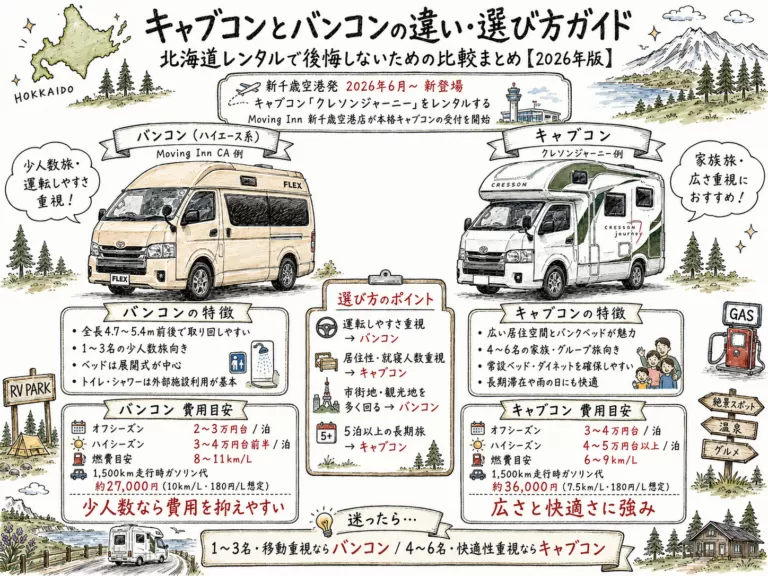
Rent at New Chitose Airport
See only the rental bases in Chitose, where the airport is.
Rent in winter (Dec–Mar)
Companies that rent through winter, listed apart from those that close.
Guide price
Moving Inn New Chitose Airport: HIACE van conversion from ¥22,000 per night. 20–30% off when booked 60–90 days ahead (official rate table, checked 15 Oct 2026).
Before you book: with an International Driving Permit if your country is in the Geneva Convention (for example the US, Australia, Singapore); Taiwan, Switzerland, Germany, France, Belgium and Monaco need your licence plus a Japanese translation (Tokyo Metropolitan Police). Questions in English: Moving Inn on WhatsApp. Every roadside station (michi-no-eki) must have free 24-hour toilets, and Hokkaido has 128 of them (MLIT).
“How much does a campervan actually cost?” — it’s the first question anyone who’s thinking about buying one faces.
Campervan prices range from around ¥1 million for a kei campervan, to over ¥5 million for a cab-over, and imported full-size motorhomes can exceed ¥20 million. This article summarises new and used price ranges by vehicle type and also covers running costs and a comparison with rental.
Campervan Price Overview (New)
| Vehicle Type | New Price Range | Typical Price Range |
|---|---|---|
| Kei Campervan | ¥2–4 million | ¥2.5–3.5 million (core) |
| Van Conversion (HiAce-based) | ¥3.5–9 million | ¥5–7 million (core) |
| Cab-Over (Camroad-based) | ¥5–15 million | ¥7–10 million (core) |
| Bus Conversion (Microbus-based) | ¥8–25 million | ¥10–15 million (core) |
| Full-Size Motorhome (Imported) | ¥15–50+ million | ¥20–30 million (core) |
The best-selling types in Japan are cab-overs and van conversions, which also account for the largest share of used market supply.
Price Range and Features by Type
Kei Campervan: ¥2–4 million
The most compact campervans, built on light commercial vehicles. Models based on the Daihatsu Hijet and similar kei vans are mainstream, with entry-level prices typically in the ¥2 million range including the base vehicle.
- Basic model: ¥2–2.8 million (simple fit-out)
- With pop-up roof: ¥2.8–4 million
- Domestic makers include: Van Shop Mikami, Expedition, Kei Campers World
Low running costs and cheap taxes mean the kei campervan is increasingly popular as a “first campervan.”
Van Conversion: ¥3.5–9 million
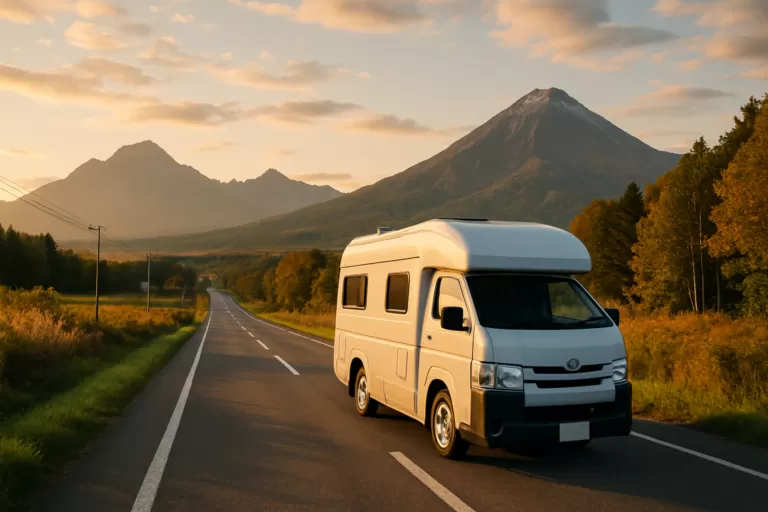
Built on the Toyota HiAce or Nissan Caravan, this is the most popular category in Japan. Because the HiAce base vehicle alone costs around ¥3 million, the standard all-in price is ¥5–7 million.
- Standard grade: ¥3.5–5 million (simple fit-out)
- Core grade: ¥5–7 million (with FF heater and sub-battery)
- High grade: ¥7–9 million (high roof, full equipment)
- Domestic makers include: Nuts RV (Clais, Evolution), Toy Factory, Shinkei
Cab-Over: ¥5–15 million
Built on the Toyota Camroad with a bank bed and large living shell fitted over the cab. The more equipment fitted, the higher the price — shower, hot water, and solar panels all together easily pushes the price past ¥10 million.
- Standard model: ¥5–7 million
- Core model: ¥7–10 million (FF heater, refrigerator, sink as standard)
- High-end model: ¥10–15 million (shower, solar, fully automated systems)
- Domestic makers include: Vantech (Z4, Cordobanks), Nuts RV (Jil), Sekiso (Park)
Bus Conversion: ¥8–25 million
Purpose-built living spaces created from microbus platforms. Production volumes are low and most are made to order, resulting in significant price variation within this category.
Full-Size Motorhome: ¥15 million+
Large campervans manufactured overseas (United States, Europe). American motorhomes and European luxury RVs fall into this category. New imports commonly exceed ¥20–50 million, and this category is popular among wealthy Japanese buyers, entertainers, and business executives.
Best Campervan Type by Use Case and Budget
Not sure which type suits you? Here’s a quick guide by how you plan to use it.
| Use Case | Recommended Type | Budget | Why |
|---|---|---|---|
| Solo / Couple travel | Kei campervan or Van conversion | ¥2–6 million | Easy to maneuver, fits in standard parking spaces, better fuel economy |
| Family (2–3 kids) | Cab-over with bunk beds | ¥7–10 million | Sleeps 4–6 people; FF heater keeps everyone warm in Hokkaido winters |
| Extended trips (2+ weeks) | Cab-over or Bus conversion | ¥8 million+ | Shower, toilet, large tanks for off-grid independence |
| Weekend getaways | Kei campervan or Van conversion | ¥2–5 million | If you use it fewer than 20 days a year, compare the cost of renting first |
Used Campervan Prices

Campervans tend to hold their value better than ordinary passenger cars. Popular models can change hands at 50–70% of their new price even after 5–10 years.
| Vehicle Type | Used Price Range | vs. New |
|---|---|---|
| Kei Campervan | ¥1–2.5 million | 50–70% of new |
| Van Conversion | ¥2–6 million | 50–70% of new |
| Cab-Over | ¥3–9 million | 50–70% of new |
| Bus Conversion | ¥5–15 million | 50–70% of new |
With used vehicles, the condition of fitted-out components (FF heater, sub-battery, water pump) directly affects price. A seemingly cheap unit can lead to expensive post-purchase repairs, so a specialist inspection of the living quarters is essential.
What to Watch Out for When Buying Used
- Reduced sub-battery capacity (replacement cost ¥30,000–80,000)
- FF heater burner blockage or ignition failure (repair ¥20,000–50,000)
- Deteriorated water hoses or leaks in plumbing
- Condition of sealing (waterproofing) between the shell and the chassis
- Prioritise “age and usage of the living quarters” over mileage
Tax Benefits of Campervan Ownership | Compared to Regular Cars
In Japan, campervans registered under the “8-number” (special purpose vehicle) classification enjoy lower vehicle tax and weight tax than standard passenger cars.
| Tax Type | Passenger Car (3L+) | Campervan (8-number) |
|---|---|---|
| Annual vehicle tax | Approx. ¥58,000/year | Approx. ¥16,000–¥27,000/year (by engine size) |
| Weight tax (at inspection) | Approx. ¥24,600/year | Approx. ¥12,300/year (~half) |
| Inspection cycle | Every 2 years | Every 2 years (same) |
To qualify for 8-number registration, the vehicle must have actual living equipment installed—sleeping berth, cooking facilities, and a table. Confirm with your dealer whether the model you’re buying qualifies.
Total Cost to Know Before You Buy

Judging by vehicle price alone makes it easy to underestimate actual costs when running costs are included. Here’s a 10-year total cost example for a new cab-over purchase.
| Item | 10-Year Cost Estimate |
|---|---|
| Vehicle price (Cab-Over, ¥8 million) | ¥8,000,000 |
| Annual running costs (¥650,000 × 10 years) | ¥6,500,000 |
| Sale value after 10 years (deducted) | −¥2,000,000 |
| Effective total cost (10 years) | approx. ¥12,500,000 |
If you use it 20 days per year, the effective cost per day is about ¥62,500. Renting for the same 20 days at ¥30,000/day comes to ¥600,000/year. For 20 days or fewer per year, renting is more cost-effective in most cases.
New Chitose Airport / Tokachi-Obihiro Airport
Rent the Cabcon “Cresson Journey”
Base yourself at New Chitose Airport and compare rates, vehicle types, and pickup locations all in one place.
See details at Moving Inn →3 Ways to Buy a Campervan for Less

① Target Display Models and Demo Vehicles
Display and demo vehicles at campervan shows and dealerships can be purchased 10–30% below new prices with low mileage. There may be some cosmetic wear, but functional issues are rare. The best deals tend to appear after spring (Apr–May) and autumn (Sep–Oct) campervan shows.
② Look for Cancelled Orders and Stock Vehicles
Vehicles from cancelled custom orders often carry larger discounts. Being already built, they’re also available immediately. Try asking dealers directly “Do you have any cancelled orders or stock vehicles?” — you may be shown inventory that isn’t publicly listed.
③ Time Your Trade-In for Maximum Resale Value
Campervan resale values tend to be highest in the lead-up to summer (April–June). “Optimising your trade-in timing” — selling your old vehicle at a high price to reduce the cost of a new purchase — is an effective way to lower total costs.
Key Services for Finding a Campervan
Main services in Japan for checking prices and buying campervans.
- Goo-net: Japan’s largest used vehicle platform with dedicated campervan filters
- Car Sensor: Large used campervan listings; easy to filter by price range
- Camping Car Land: Specialist dealer. Handles new, used, and custom orders
- Japan Camping Car Show (annual, Makuhari): Japan’s largest event. View all the latest models and check prices directly from manufacturers
New Chitose Airport / Tokachi-Obihiro Airport
Rent the Cabcon “Cresson Journey”
Base yourself at New Chitose Airport and compare rates, vehicle types, and pickup locations all in one place.
See details at Moving Inn →Frequently Asked Questions (FAQ)
Q. What is the cheapest type of campervan to buy?
Kei campervans are the cheapest, at around ¥2–4 million new or ¥1–2.5 million used. However, the equipment is minimal — if you want comfort and amenities, a van conversion or larger is more realistic.
Q. Can I buy a campervan on finance?
Yes, most dealers and retailers offer auto loans. Interest rates typically run 3–8%, and some dealers offer residual value (balloon) finance plans. To keep monthly payments low, consider a larger deposit or a balloon finance arrangement.
Q. Can I negotiate the price of a campervan?
Campervans are often built to order, so discounts are generally small. That said, buying a display model, a cancelled order, or negotiating on trade-in terms can sometimes yield discounts of several hundred thousand yen.
Q. In what situations does renting beat buying?
When annual usage is 20 days or fewer, renting tends to work out cheaper once running costs are factored in. If you want to “try before you buy,” renting several different types over one to two years is also a good approach.
Q. How much does it cost to own a campervan annually?
For a cab-over in the ¥8 million range, annual running costs typically break down as follows:
- Vehicle tax: approx. ¥16,000–¥27,000
- Voluntary insurance: approx. ¥100,000–¥200,000
- Biennial inspection (per year): approx. ¥50,000–¥100,000
- Parking: ¥0–¥300,000/year (varies by region)
- Fuel: approx. ¥100,000/year (5,000km at 8km/L, ¥170/L)
- Living equipment maintenance: approx. ¥50,000–¥100,000/year
Total: roughly ¥400,000–¥650,000 per year for a cab-over. A kei campervan costs significantly less—around ¥200,000–¥350,000 annually.
Q. Can I drive a campervan with a standard license?
Most campervans can be driven with a standard Japanese license (including AT-only). A standard license obtained on or after March 12, 2017 covers vehicles under 3.5 tonnes GVW (a semi-medium license covers under 7.5 tonnes). Kei campervans, van conversions, and most cab-overs fall within this limit. Larger cab-overs and bus conversions may exceed 3.5 tonnes—always confirm before renting or buying. For foreign visitors, an IDP (International Driving Permit) based on the 1949 Geneva Convention is required in Japan.
Summary | Kei Campervans from ¥2 million; Cab-Overs Centre Around ¥7–10 million
- Kei Campervan: new ¥2–4 million. Used ¥1–2.5 million
- Van Conversion: new ¥3.5–9 million. HiAce-based models centre around ¥5–7 million
- Cab-Over: new ¥5–15 million. Fully equipped core models ¥7–10 million
- Bus Conversion: new ¥8–25 million. Mostly made to order with wide price range
- Used vehicles hold value well at 50–70% of new. Checking the condition of fitted-out parts is essential
- For 20 or fewer days per year, renting is typically more cost-effective
Data Sources Used in This Article
- New prices by vehicle type: Published prices from major domestic campervan manufacturers (Vantech, Nuts RV, Sekiso, etc.) and reference prices from the 2026 Japan Camping Car Show
- Used price ranges: Goo-net and Car Sensor used campervan market data (as of May 2026)
- Resale value trends: Reference to information published by JCCA (Japan Camping Car Association) member dealers
Book a Campervan in Hokkaido
Moving Inn New Chitose Airport supports English booking and offers airport transfers.
Pick a campervan by what matters to you.
Rent at New Chitose Airport
See only the rental bases in Chitose, where the airport is.