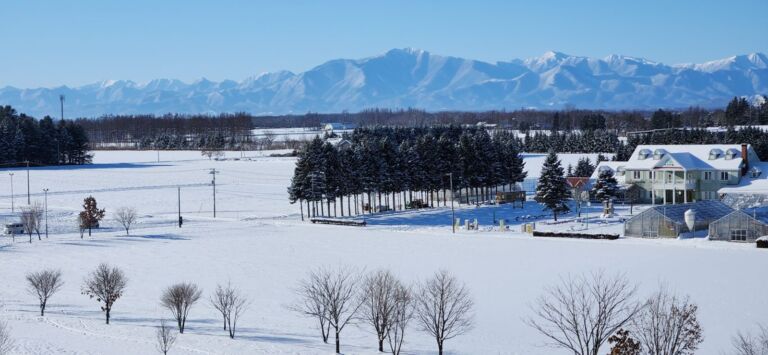
When Is the Best Time to Visit Hokkaido by Campervan? Comparing Spring, Summer, Autumn and Winter Weather, Crowds and Cost [2026 Edition]
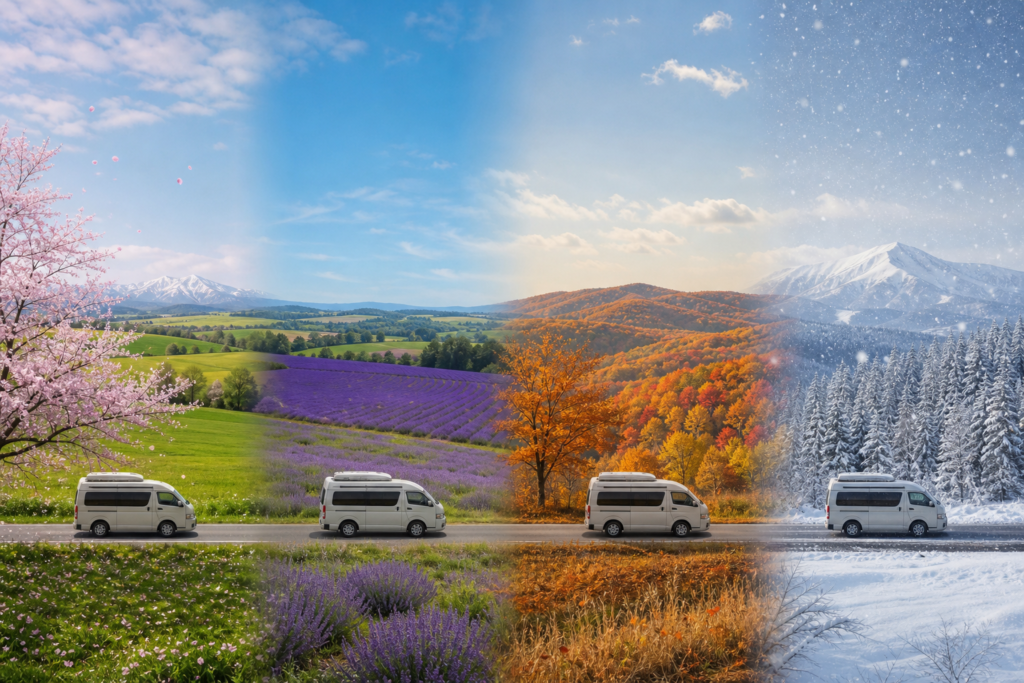
When is the best season to visit Hokkaido? The honest answer is: it depends on what you want to do. Summer is best for flower fields, autumn for foliage, winter for drift ice and snowy scenery, and spring if you want to travel quietly on a smaller budget. Every season offers something unique — and every season has its own drawbacks.
But leaving it at “it depends on the person” won’t help you decide, so this article lines up the climate for all four seasons in one table using the Japan Meteorological Agency’s normal-year averages, then compares crowding and cost trends, and how well each season suits a campervan trip. For the details of what to do in each season, treat this as the entry point that connects you to our season-by-season guides.
The temperature and snowfall figures here are limited to what could be confirmed as of 2026-08-19 from the Japan Meteorological Agency’s published normal-year values for Sapporo (1991–2020). Event dates and the best time to see flowers or autumn leaves shift from year to year, so this article avoids making definite claims and instead points you to the relevant guide articles and official sources to check.
New from New Chitose Airport — Available from June 2026
Rent the Cabcon “Cresson Journey”
Base yourself at New Chitose Airport and compare rates, vehicle types, and pickup locations all in one place.
See details at Moving Inn →If you’re not sure, work backward from what you want to do
Here’s the summary table with the conclusions first. Find the row closest to your travel goal, then follow the link to the detailed guide on the right. We’ll walk through what each season actually looks like next.
| What you want to do | Best season | Detailed guide |
|---|---|---|
| Flower fields, lavender, lakes and primeval forest | Summer (July–August) | Top 10 Summer Spots |
| Family summer vacation trip | Late July–August | Complete Summer Vacation Rental Guide |
| Autumn foliage drive | Autumn (September–October) | Complete Autumn Foliage Drive Guide |
| Harvest experiences, autumn food | Autumn (September–October) | Farm Harvest Experiences by Campervan |
| Snowy scenery, Snow Festival, drift ice | Winter (January–March) | Complete Drift Ice Campervan Guide |
| Keeping costs down, traveling quietly | Spring/autumn, outside holiday weeks | Off-Season Cost-Saving Tips |
| First-timers who want an easier drive | Snow-free June–September | Complete Model Course Guide |
How different is the climate across spring, summer, autumn and winter?
First, the numbers everything else is built on. Here’s what the Japan Meteorological Agency’s published normal-year values for Sapporo (1991–2020) look like broken down by season (JMA, “Sapporo normal values”, confirmed 2026-08-19).
| Season | Month | Sapporo average monthly temperature (normal value) | Monthly snowfall depth total (normal value) |
|---|---|---|---|
| Spring | April | 7.3℃ | 6cm |
| May | 13.0℃ | — | |
| June | 17.0℃ | — | |
| Summer | July | 21.1℃ | — |
| August | 22.3℃ | — | |
| Autumn | September | 18.6℃ | — |
| October | 12.1℃ | 1cm | |
| Winter | November | 5.2℃ | 30cm |
| December | -0.9℃ | 113cm | |
| January | -3.2℃ | 137cm | |
| February | -2.7℃ | 116cm | |
| March | 1.1℃ | 74cm |
Three things stand out from this table. Even at the height of summer, Sapporo’s monthly average stays in the low 20s°C — a different world from the extreme heat of Honshu. Snowfall normal values already start appearing in October, and winter properly sets in from November. And April is still a transitional period with leftover snow.
One caution: Hokkaido is large enough to swallow the whole of Honshu, and this table is only for Sapporo. On the same day, temperatures can be completely different between Hakodate in the south and inland areas in the east. Once you’ve decided on a destination, check that specific location’s normal values on the JMA’s past weather data page.
Spring (April–June): before the crowds, snowmelt and flowers
Spring in Hokkaido runs about a month behind Honshu. Sapporo’s April average of 7.3°C feels roughly like early spring in Honshu. Cherry blossoms and shibazakura are concentrated in May, and by June the average climbs to 17.0°C, with long days that make for easy driving.
For a campervan trip, spring’s strength is that it’s uncrowded and reasonably priced. Golden Week is the one stretch that overlaps with the nationwide peak season, but May and June outside that window are quieter than summer at both tourist spots and on the roads. Nights are still cold, so just confirm with the rental company’s official site whether heating is included.
The weak point is April. As the normal value of 6cm of snowfall in April suggests, snow lingers on roadsides, and icy roads on mountain passes and in the early morning and evening remain a concern. If you want to avoid winter driving conditions, May onward is the safer choice.
If you’re timing your trip around Golden Week, read our Golden Week Spring Travel Guide; for June, when flowers and fresh greenery are in full swing, see our June Spring Travel Guide. Flower peak timing shifts year to year, so check each spot’s official site for bloom status before you set out. For a location-by-location, ten-day breakdown of May temperatures, clothing, and overnight gear, see our guide to Hokkaido’s Golden Week and May temperatures.
Summer (July–August): the classic choice — but it’s a battle for bookings and beating the crowds
Furano’s lavender, the hills of Biei, the lakes of eastern Hokkaido — many of the postcard scenes of Hokkaido tourism belong to summer. Sapporo’s average temperature is 21.1°C in July and 22.3°C in August, just right for being active outdoors. Daytime driving and overnight parking both hit their best conditions of the year in this season.
The trade-off is just as clear. Summer vacation and Obon are the hardest weeks of the year to book, with peak-season pricing to match. Popular vehicle types fill up early, so if you’re planning to rent in July or August, start moving months in advance. For how to plan the budget, see our Summer Vacation Cost Simulation; for the full picture from booking through an 8-day route, see our Complete Summer Vacation Rental Guide.
For choosing where to go, start with our Top 10 Summer Spots and Summer Travel Guide. Lavender and other flower fields peak at different times depending on the year and the farm, so check bloom updates on each farm’s official site before locking in your schedule.
Autumn (September–October): foliage and food — arguably the best match for a campervan trip
Sapporo averages 18.6°C in September. The heat has faded, making for easier nights sleeping in the vehicle than summer. Crowds ease off once summer vacation ends, while the things to see and eat — foliage, mushrooms, fruit, salmon — keep multiplying. If you’re weighing comfort against how much there is to experience, autumn is a strong contender.
The foliage moves from the mountains down to the lowlands over more than a month, so what you see depends heavily on which week you go where. We leave the route-planning to our Complete Autumn Foliage Drive Guide. If you want to walk right into the foliage, there’s also our autumn trekking article. Peak timing itself shifts year to year, so check each area’s official foliage updates just before you go.
If you’re choosing by food, see our Farm Harvest Experiences by Campervan, which covers potato digging and grape picking, and our Autumn Travel Guide for the full September–October picture. One caution for late October: Sapporo’s own snowfall normal value for October is 1cm, meaning the first reports of snow start arriving by month’s end. If you’re routing over a mountain pass in October, check road conditions every morning. For a location-by-location, 10-day breakdown of October temperatures, clothing, and overnight-parking gear, see our guide to October temperature and clothing by location.
Winter (November–March): a different Hokkaido altogether — and a real option if you’re prepared
Sapporo’s normal annual snowfall is 479cm, and January’s average temperature is -3.2°C. For a location-by-location breakdown of November–February highs and lows and what gear you need for an overnight stay, see our guide to Hokkaido’s winter temperatures. The numbers alone might make you hesitate, but Hokkaido has too many things that exist only in winter — the Snow Festival, drift ice, powder snow, steaming outdoor hot springs. Prefectural statistics actually show overseas visitors increasing in autumn and winter (you can check the figures in our article on why overseas visitors come to Hokkaido).
For a campervan trip, there are two hurdles: driving on snow and cold inside the vehicle. Both are largely about fear of the unknown, and both can be clearly addressed with the right gear and driving approach. Start with our article that resolves every winter worry, then check the practicalities of driving in our Complete Winter Driving Guide.
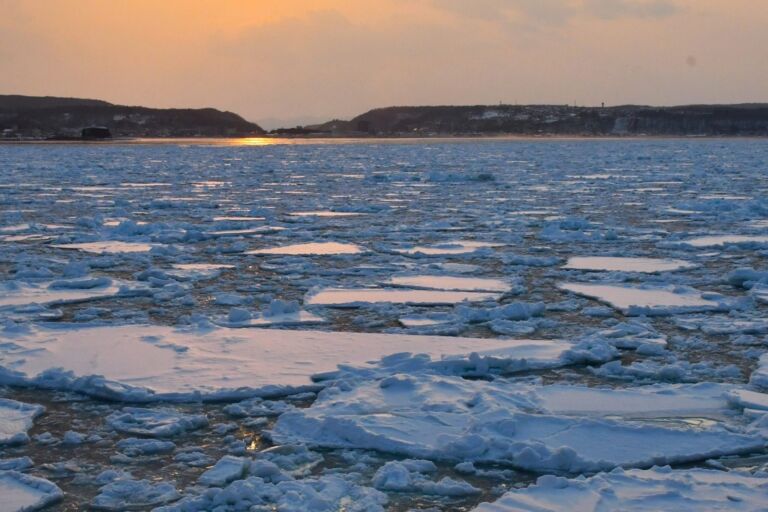
One thing worth confirming first is simply whether a company rents out vehicles in winter at all — some companies and bases have winter closures or winter-specific rental conditions. Check winter operations and equipment on your candidate rental company’s official site before booking. On the destination side, our Winter Travel Guide and Complete Drift Ice Campervan Guide cover it. If you’re planning your trip specifically around Lunar New Year, our Lunar New Year Campervan Travel Guide shows what peak midwinter actually looks like, which makes planning easier.
If you’re choosing purely on cost and crowds, where’s the sweet spot?
Most rental companies use seasonal pricing, with Golden Week, summer vacation, Obon, and the New Year holidays tending to be set as peak season. The exact rates and date ranges vary by company, so always confirm with each company’s official price list.
Flip that around, and it means the total cost can change just by shifting your dates, even with the same vehicle for the same number of days. Spring and autumn outside the holiday weeks, plus winter, tend to be the sweet spots on price. For how to plan a budget trip, see our Off-Season Cost-Saving Tips; for what costs look like if you rent during peak season instead, see our Summer Vacation Cost Simulation.
So when should you actually go to Hokkaido for the first time?
If this is your first campervan trip and you have no experience driving on snow, we recommend the snow-free months of June through September. The driving is easier, the days are long, and there are more overnight parking options to choose from. Within that window, June and September keep both crowds and cost down, while July and August deliver the full set of classic scenery.
From your second trip onward, stepping into autumn foliage or winter drift ice turns the same Hokkaido into an entirely different place. If you’re unsure how to plan your itinerary, our Complete Model Course Guide makes it easy to pick a template by number of days.
New from New Chitose Airport — Available from June 2026
Rent the Cabcon “Cresson Journey”
Base yourself at New Chitose Airport and compare rates, vehicle types, and pickup locations all in one place.
See details at Moving Inn →Frequently Asked Questions
Does Hokkaido have a rainy season?
Hokkaido is not among the regions for which the Japan Meteorological Agency announces the start and end of the rainy season (confirmed against the list of covered regions in JMA’s “past rainy season start/end data”, checked 2026-08-19). That said, some years bring stretches of cloud and rain around June, so it’s worth packing rain gear regardless of season.
When is renting cheapest?
Pricing structures vary by company, so we can’t make a blanket claim, but many companies set Golden Week, summer vacation, Obon, and the New Year holidays as peak season, with rates typically dropping outside those windows. Along with choosing your timing, read our Off-Season Cost-Saving Tips, and confirm the final price on each company’s official rate sheet.
Can you rent a campervan in winter?
Some companies do operate through winter. But winter closures and winter-specific rental conditions vary by company and base, so check winter operating status on your candidate company’s official site. Preparing for snow driving and keeping the cabin warm is covered in our article that resolves every winter worry.
When is lavender or autumn foliage at its best?
Peak timing shifts with the year’s weather, so this article doesn’t make a fixed claim. For flower fields like lavender, check bloom updates on each farm’s official site; for foliage, start with our Complete Autumn Foliage Drive Guide and confirm each area’s official updates just before you go.
If it’s your first time, which month is safest?
If you have no experience driving on snow, June through September. Within that range, choose June or September to keep crowds and cost down, or July–August if you want to prioritize the classic scenery like lavender and summer in eastern Hokkaido. Compare combinations of trip length and destination in our Complete Model Course Guide.
Book a Campervan in Hokkaido
Moving Inn New Chitose Airport supports English booking and offers airport transfers.
![Things to Do in Sapporo in Winter: Beyond the Snow Festival, Plus Seasonal Highlights and a Campervan Guide [2026-27]](https://hokkaido-campingcar.jp/wp-content/uploads/2026/10/sapporo-hl1841-768x576.jpg)
![Monbetsu Drift Ice Festival 2027 [Feb 11–14]: Dates, Ice Sculptures, Garinko-go Icebreaker, Parking and Access by Campervan](https://hokkaido-campingcar.jp/wp-content/uploads/2026/10/monbetsu-hl999-768x576.jpg)
![Hokkaido New Year Weather and What to Wear | Sapporo, Hakodate, Asahikawa, Obihiro Mornings and Evenings, and Heavy-Snow Years [2026-27]](https://hokkaido-campingcar.jp/wp-content/uploads/2026/10/hokkaido-new-year-holiday-weather-eyecatch-768x432.webp)
![Hokkaido Illumination 2026-27 [Dates]: Sapporo Starts Nov 20, Plus Otaru, Asahikawa, Obihiro & Hakodate for Campervan Trips](https://hokkaido-campingcar.jp/wp-content/uploads/2026/10/hokkaido-illumination-2026-eyecatch-768x432.webp)